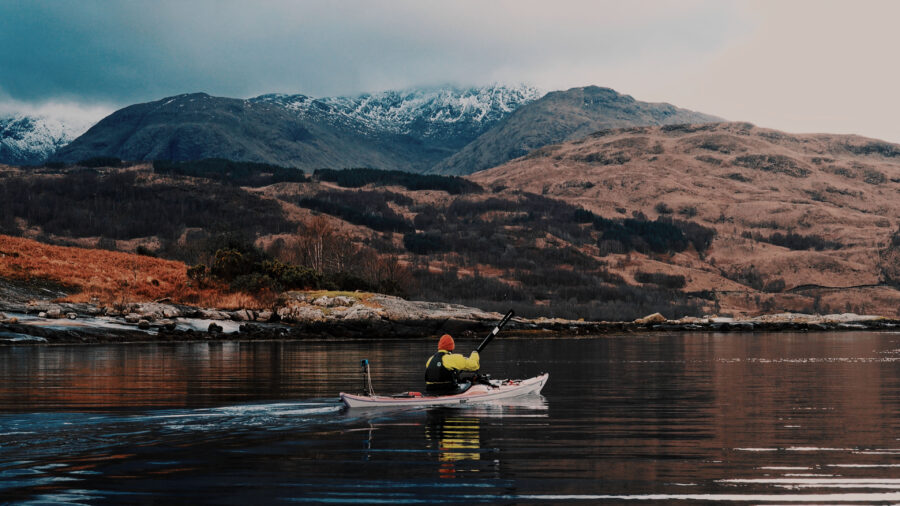
“The Volan is ready for you to collect tomorrow,” said the email, as I sat in my hotel room, on my way up north for a few weeks of wintery weather and paddling in Scotland. “and it’s a lightweight layup, only 19.9kg!” Good lord, this was going to be a treat.
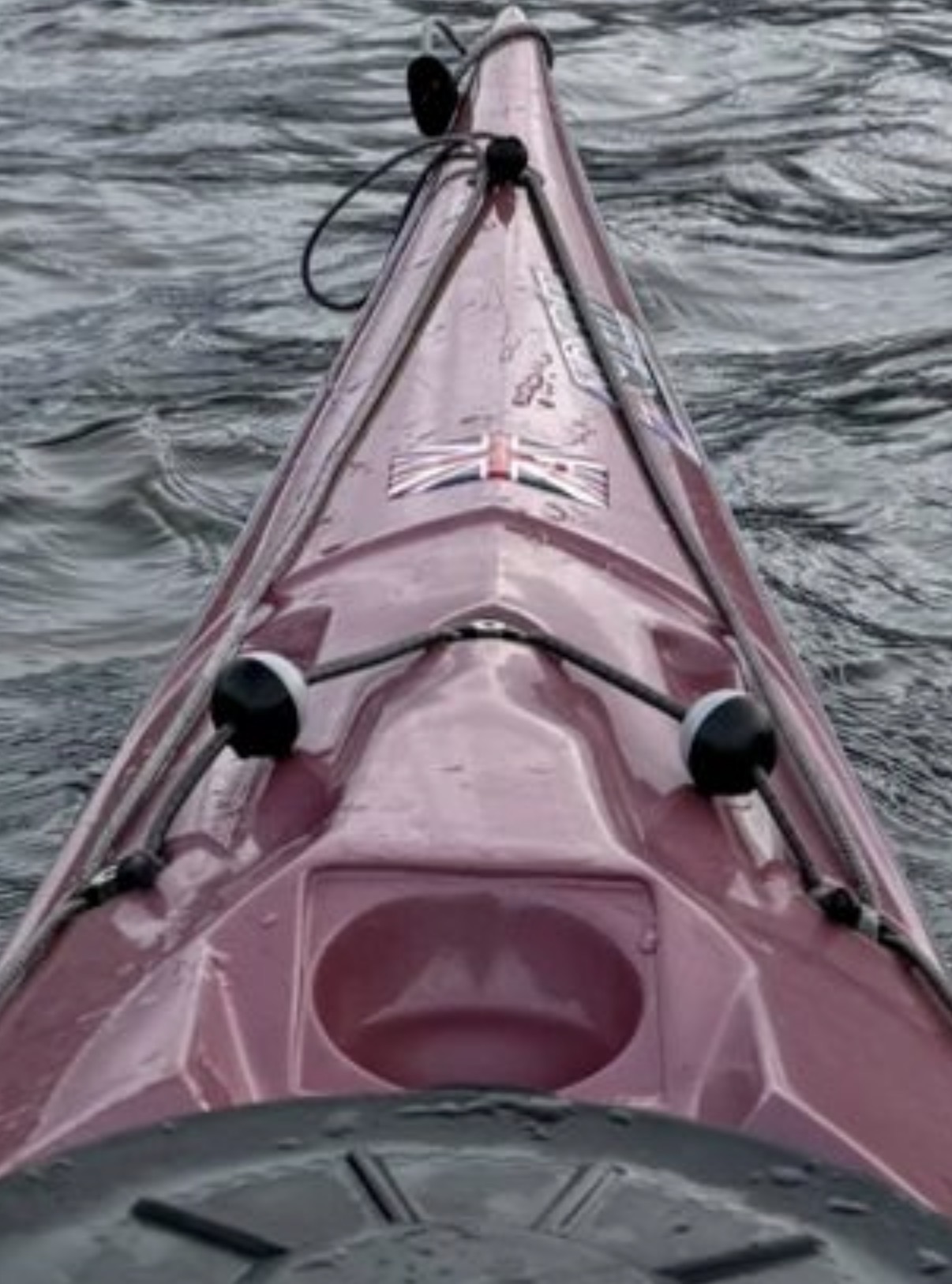
The excitement built until I arrived at Go Kayaking and saw it. Because, frankly, it was made in a colour scheme for people who don’t like colours. Or perhaps, being a demo boat, they’d simply been picked to deter theft. I’m going for the latter, its palette an utterly charmless combination of Polychromatic Pink (not actually that bad on its own), Light Violet (ewww) and Light Grey (ugh) that made me grimace. I was planning on shooting a film with it, and these deeply uncool pastels were already wrecking my cinematic vision. And then I picked it up, and in that single moment, all her aesthetic sins were forgiven, because my god, she’s light. So light. Sling-over-your-shoulder-and-strut-down-to-the-shoreline without a care in the world, light. Hell yeah, it was adventure time.
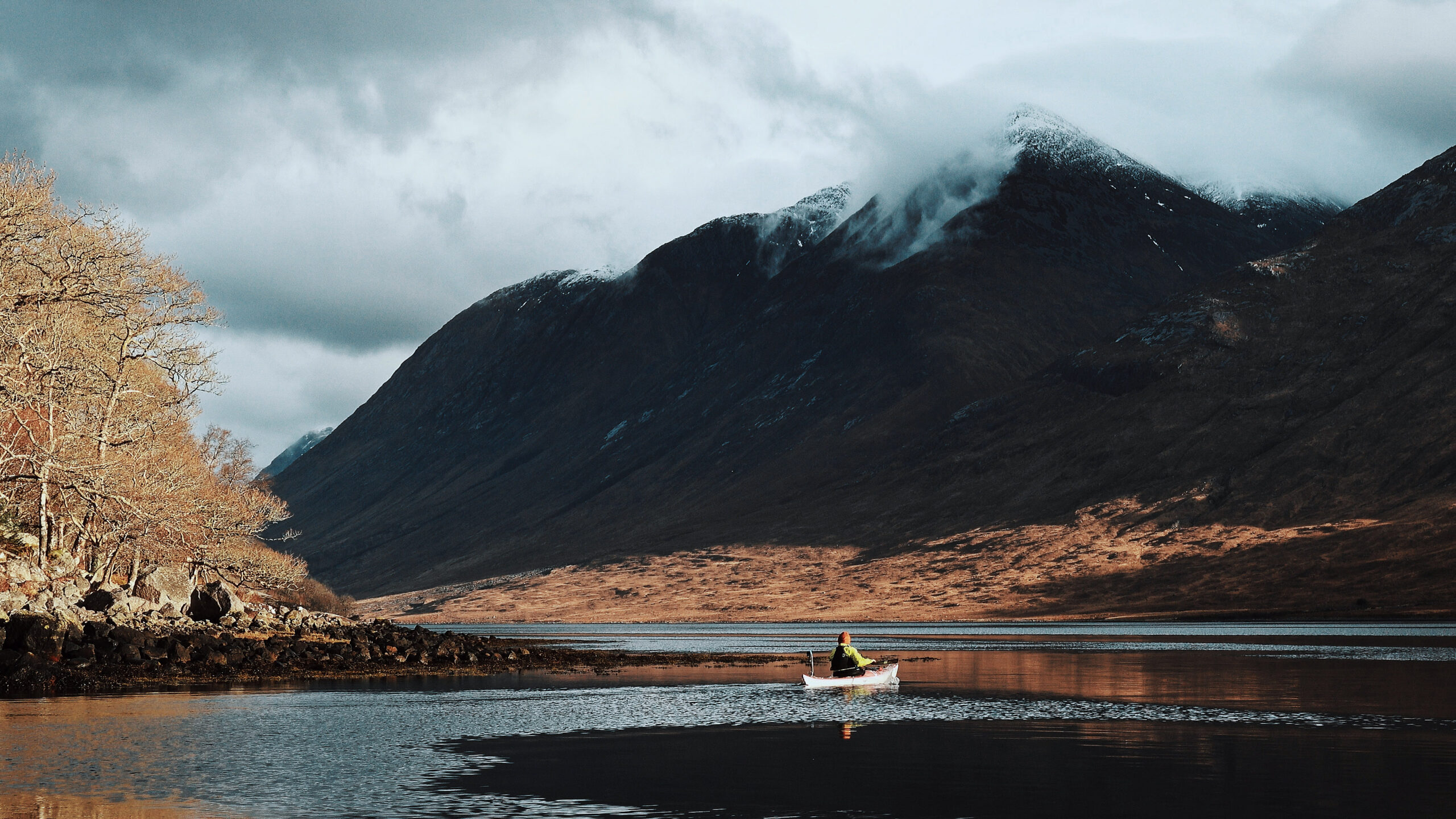
While I’m occasionally dragged into rough stuff by my friends, I am far more of an explorer kayaker, preferring long days on the water, gear stashed in hatches while investigating interesting shorelines before pitching my tent and watching the sun dip on the horizon. My main boat is a custom Cetus MV that I’ve had for several years and absolutely love, but it’s a lot of boat to haul around for shorter, less demanding trips, which is why I was particularly keen to try the Volan. Certainly, on paper, it’s a boat that ticks a lot of boxes. I loaded her up and headed for Loch Etive in Scotland, a large and stunningly beautiful sea loch (fjord to those of you on other chunks of rock around the world) on the west coast. It’s a place well known to paddlers for the considerable tidal rapids near where it meets the sea, but it’s the upper reaches that I love, wild and serene as they are.
Being used to my Cetus and her smooth chines, however, the Volan did take a bit of getting used to. Within 30 seconds of me paddling out onto the water, I almost capsized when I edged the boat, and the unexpected sensation of it immediately rolling and catching onto its hard chine took me by surprise. She’s a lively little thing, keen to engage and quick to accelerate. She’s like the Cetus’ punky little sister and I felt myself falling in love pretty quickly.
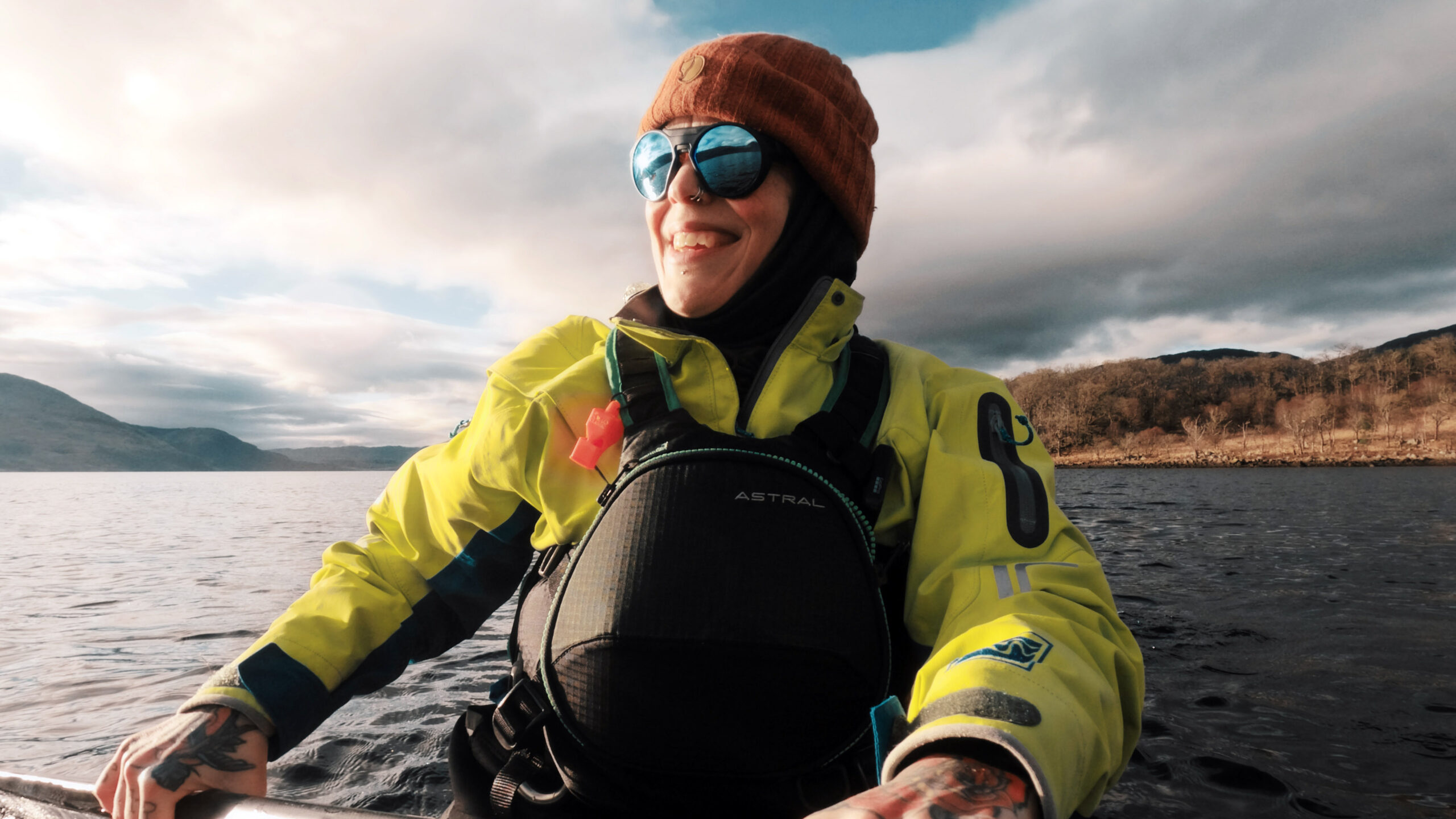
At 5’5″ and 155lb (minus the Christmas weight), the 158 feels like it was tailor made for me. Being of a sort of “in-between” stature, I’ve learned over the years to paddle boats that have always been ever so slightly too big for me, with thigh pads that tend to sit on my knees instead, and beams that have often felt too wide for me to easily hold on edge. I think a lot of women have this issue with kayak sizing, where we’re on the cusp or a little too big for the small-volume boats, but a little too small for the mediums. As such, sitting in the Volan, I felt connected to it in a way that’s unusual for me; the immediate feedback I’d get from it was so refreshing and engaging to paddle with. The Volan is fun.
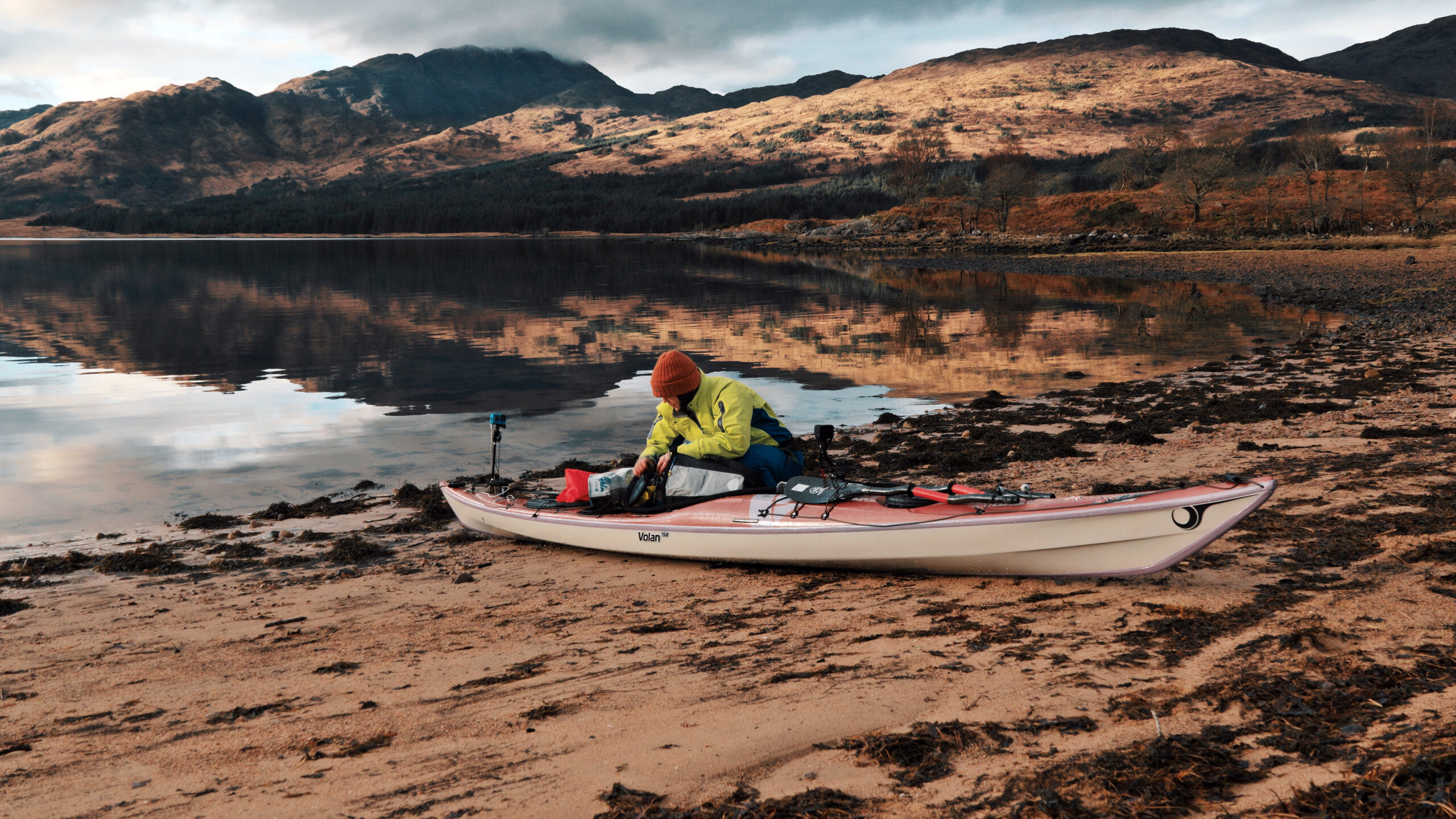
I was heading out on a two-night trip up the loch, and while this kayak looks and feels quite small, I had no trouble packing all my camping and photography gear into it, and much like the Cetus, the Volan’s stability increases with load, creating a very smooth, confidence-inspiring platform to paddle in, even when the wind picks up. This is particularly important for someone like myself, who does a lot of filming from my kayak.
On my first afternoon heading up the loch, the wind did pick up quite noticeably, creating some small chop that the Volan, with her fairly considerable bow rocker, just rode over. I noticed some slight leecocking in the quartering wind at that point, but a bit of skeg solved that (this may have been exacerbated by a slightly unevenly packed boat). I also found myself deploying the skeg at times when I wanted to drift forward with momentum while filming; otherwise, she had a tendency to start veering slightly to the side. On that note, I particularly like the placement of the skeg slider on the top of the deck, as its position on the side of my Cetus usually involves at least one or two expletive-laden encounters with my thumb on trips.
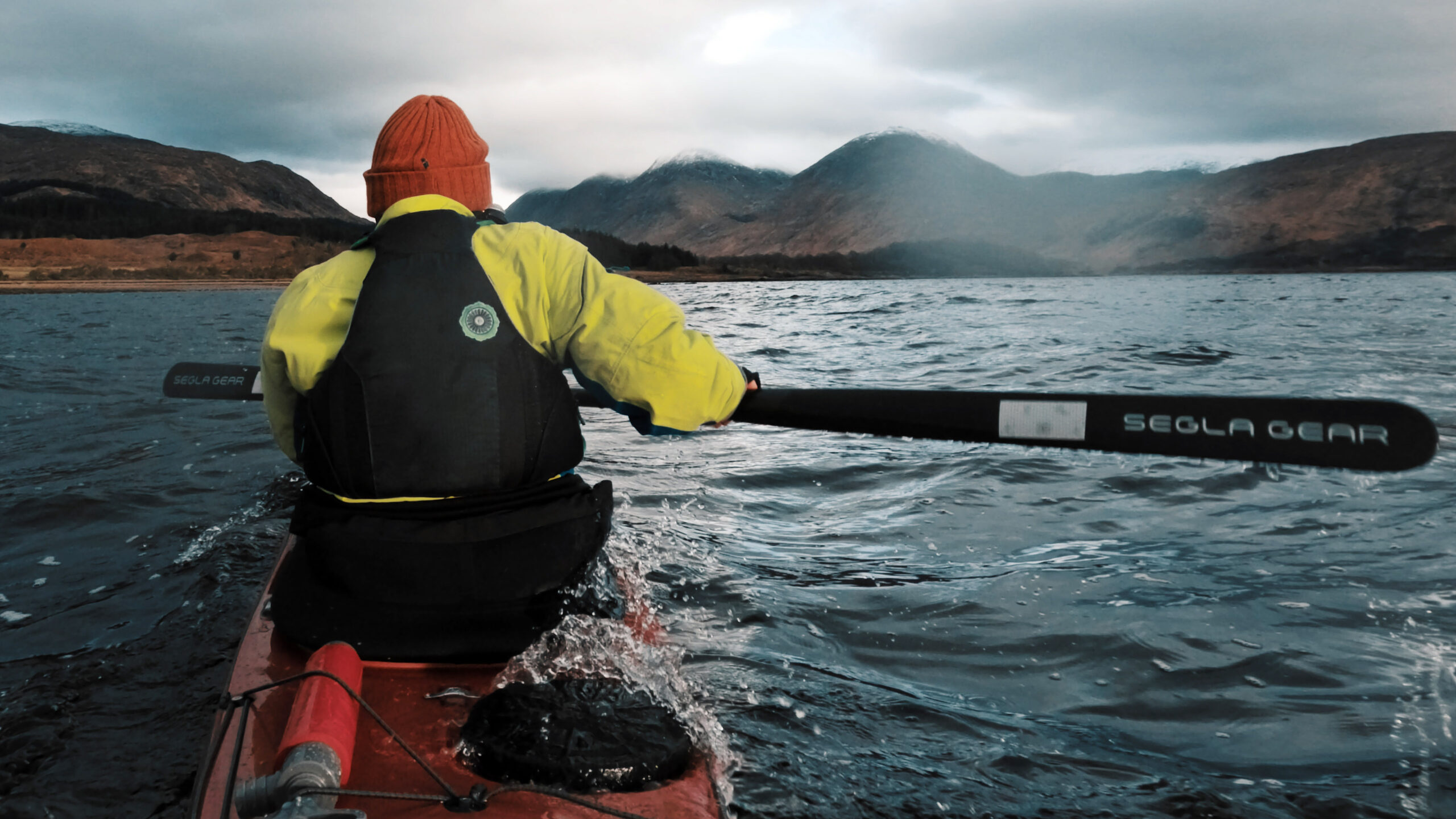
Being a relatively short sea kayak, the Volan is incredibly manoeuvrable, somewhat reminiscent of the Virgo and Leo in that respect, although the long, hard chines and increased rocker of the boat give her a feel entirely of her own, as the bow and stern release from the water very quickly when you put her on edge, freeing the boat to turn very rapidly. As someone who uses a Greenland paddle, I particularly like the way the hard rails on her hull allow me to carve into turns while leaning on my blade, which is something that soft-chined boats are less responsive to. It’s a very intuitive way of paddling and moving around the water that I really love.
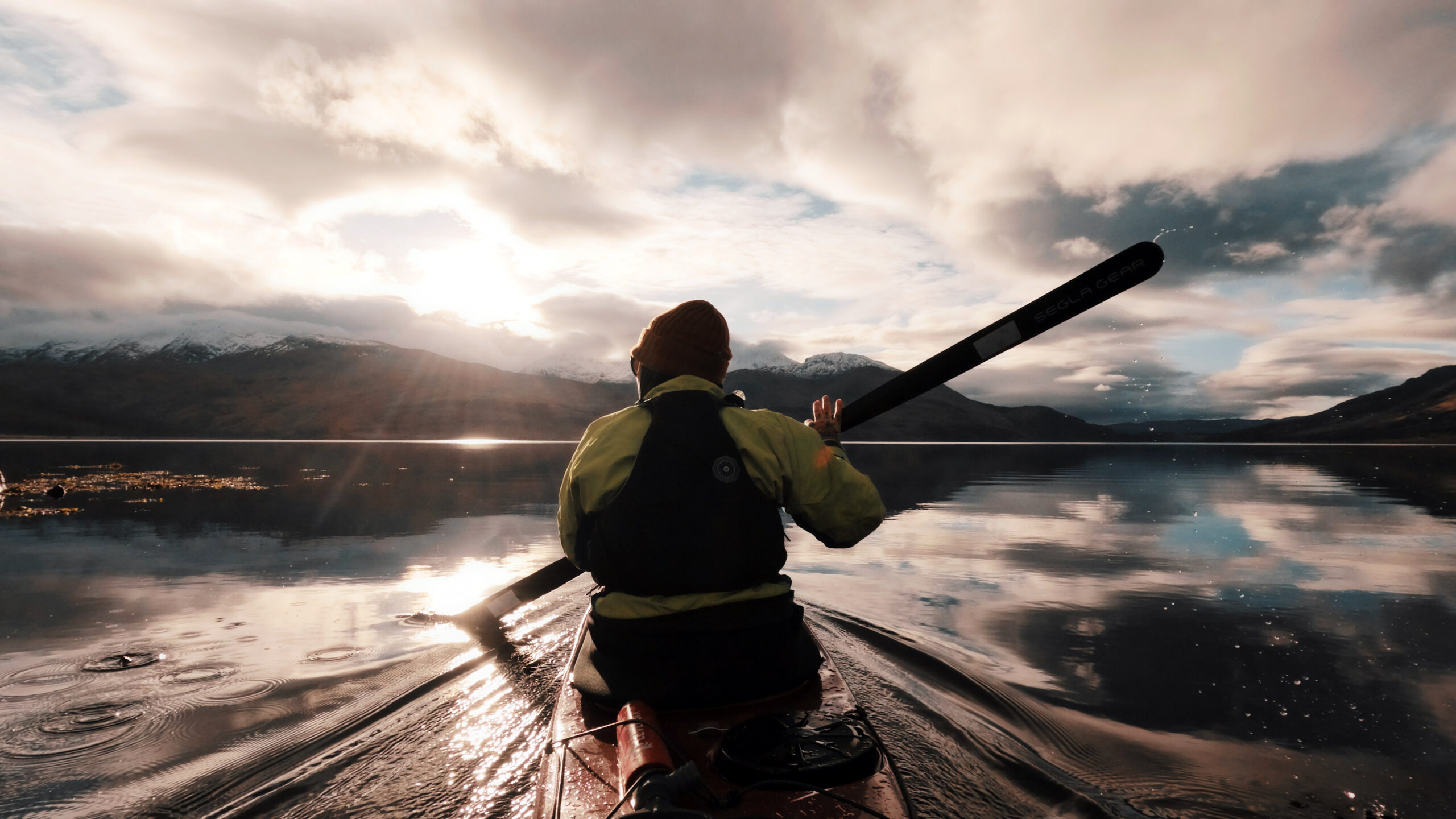
The Lightweight Kevlar/Carbon Infusion layup means the boat isn’t just incredibly light, but also exceptionally stiff, and you really do feel that difference in performance on the water, every iota of effort you move through your body passing directly into the hull, too. It’s an absolute joy to paddle, and I measured a max speed of around 4.5kt/hr in her, which isn’t really significantly less than my Cetus, which, with effort, I can generally get to around 5kt/hr. For days when you’re paddling less than 15 miles or so, you’re really not going to notice an appreciable difference between a boat like this and a longer one.
Over the course of the weekend, I paddled the Volan in conditions varying from absolutely flat calm to gusts of around F4, both fully laden and only lightly packed, and found it a superb ride.
After several days of absolutely blissful paddling and camping on the loch, I was starting my journey back down to my launch point, when, around half a mile out on the open water with the freezing wind gusting in my face, I realised, to my horror, that the familiar feeling of my photography gear bag that sits with me in my cockpit was absent. The sense of dread deepening, I slowly turned around to find it perched on the top of my stern hatch cover, where I’d placed it before getting into the kayak. Somehow, miraculously, it had remained there, despite not being attached to anything, in the windy chop and the wake of my friend’s rib boat that I’d been playing in. As I pulled off my spraydeck and turned awkwardly in the kayak as I pitched up and down in the rolling water, I reached out and managed to grab the bag in a panic, pulling it down and stashing it between my feet. I suspect this may have ended badly in a less stable kayak, so I can only thank the Volan and her forgiving hull for that one. Crisis averted!
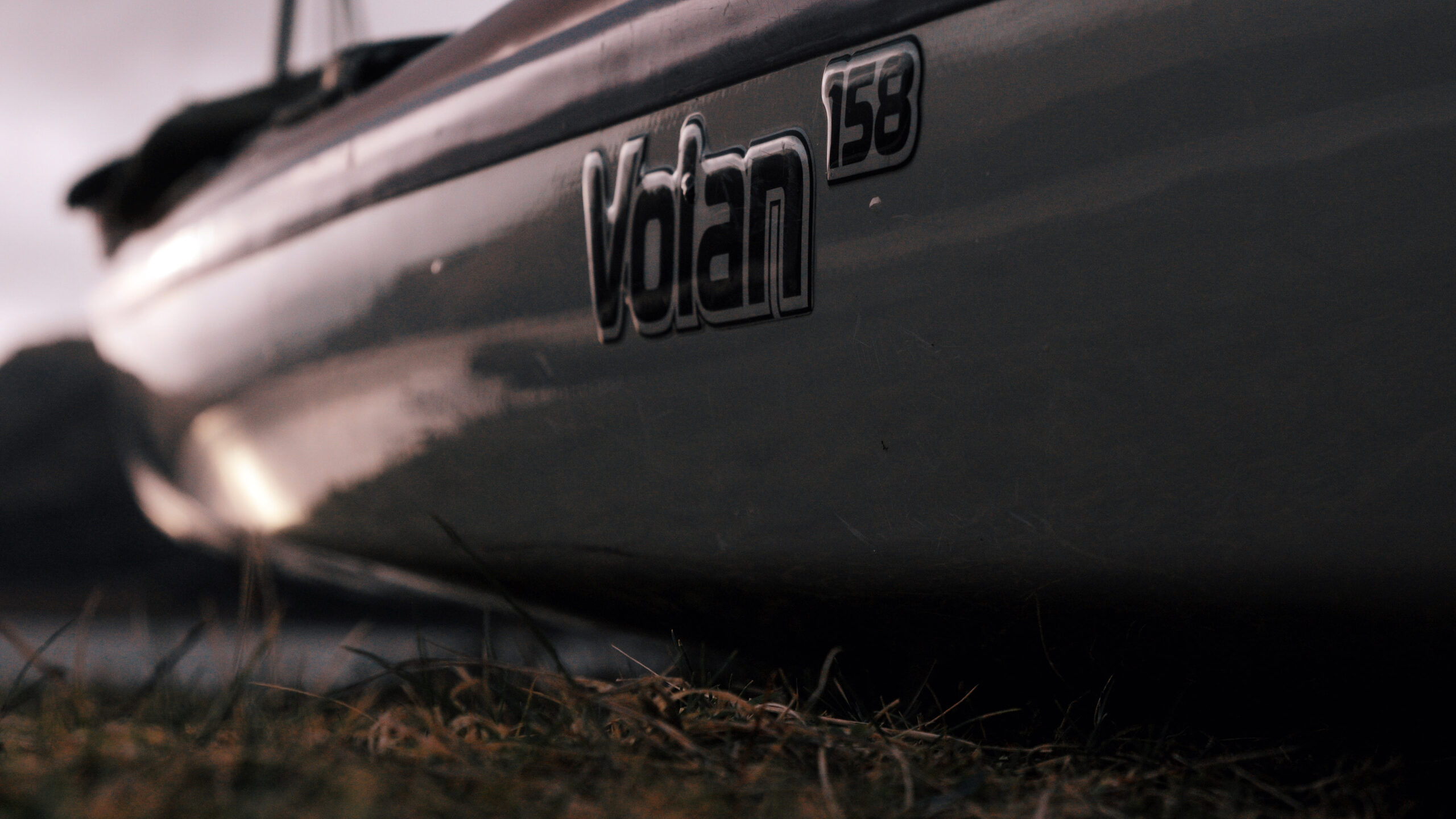
While there are many kayaks on the market claiming such, the Volan truly is an all-rounder, covering miles with ease, while her playful lines respond quickly to paddler input and varying sea states. I imagine she’d be a fantastic kayak for rough-water play, and hope to try her out in those conditions at some point soon.
Her exceptionally light weight made things so easy for handling both on and off the water, and the standard P&H outfitting is predictably comfortable for a long day of exploring, with plenty of space to stretch my legs and flex my feet when needed. While the Cetus would still be my choice for longer trips like week-long island circumnavigations or trips involving significant open crossings, it would be hard to beat the Volan for day trips and shorter multi-day journeys.
As I loaded her back onto my car for the journey home, that weird pink colour glinting in the afternoon sun, I realised that what they say is true: personality matters more than looks, and I’d certainly fallen for this kayak. Although I would definitely get one in a radically different colour.
You can watch my film of the weekend below.