Sea Kayaking Articles from P&H Staff, Team Paddlers, and Friends

Month: August 2026

Playing the Long Game: A Journey to Muckle Flugga

Muckle Flugga

The Shetland Islands lie around 160km north of mainland Britain, surrounded by the Atlantic Ocean and the North Sea, and exposed to every swell and weather system they can throw at them. They’re not for the faint-hearted, yet for generations of paddlers they’ve become a sea kayaker’s mecca. That’s thanks to an extraordinary coastline of towering cliffs, immense sea stacks, cathedral-sized caves and countless arches, together with an archipelago of islands waiting to be explored. Yet it isn’t just the scenery that draws people back. It’s the wildlife—from thousands of nesting seabirds to seals, otters and killer whales—and the warm welcome from the people who call these remote islands home.
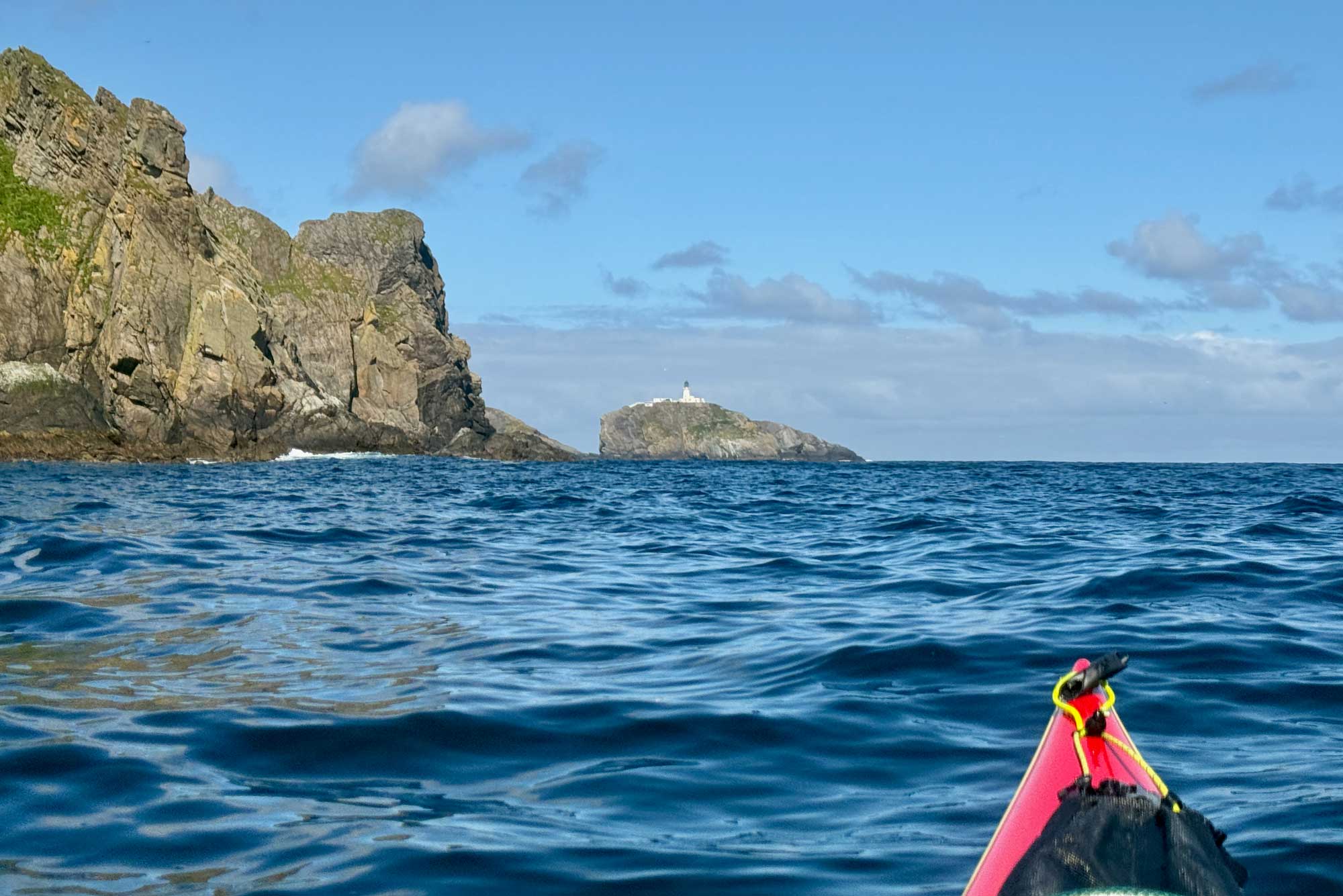
First sight of Muckle Flugga

It is for these reasons that I, like so many other sea kayakers, have fallen in love with these remote islands and always look forward to returning. This year was no different. I was invited north to coach with the local kayak club during the biannual Shetland Sea Kayak Symposium, organised entirely by dedicated volunteers. The welcome, as always, was warmer than the weather. Despite the wind, grey skies and rain, more than 100 paddlers took to the water each day to enjoy the symposium and the unique Shetland experience. The paddling was, of course, fantastic, but it was probably the cakes, conversations, new friendships and the ceilidh that created the strongest memories.
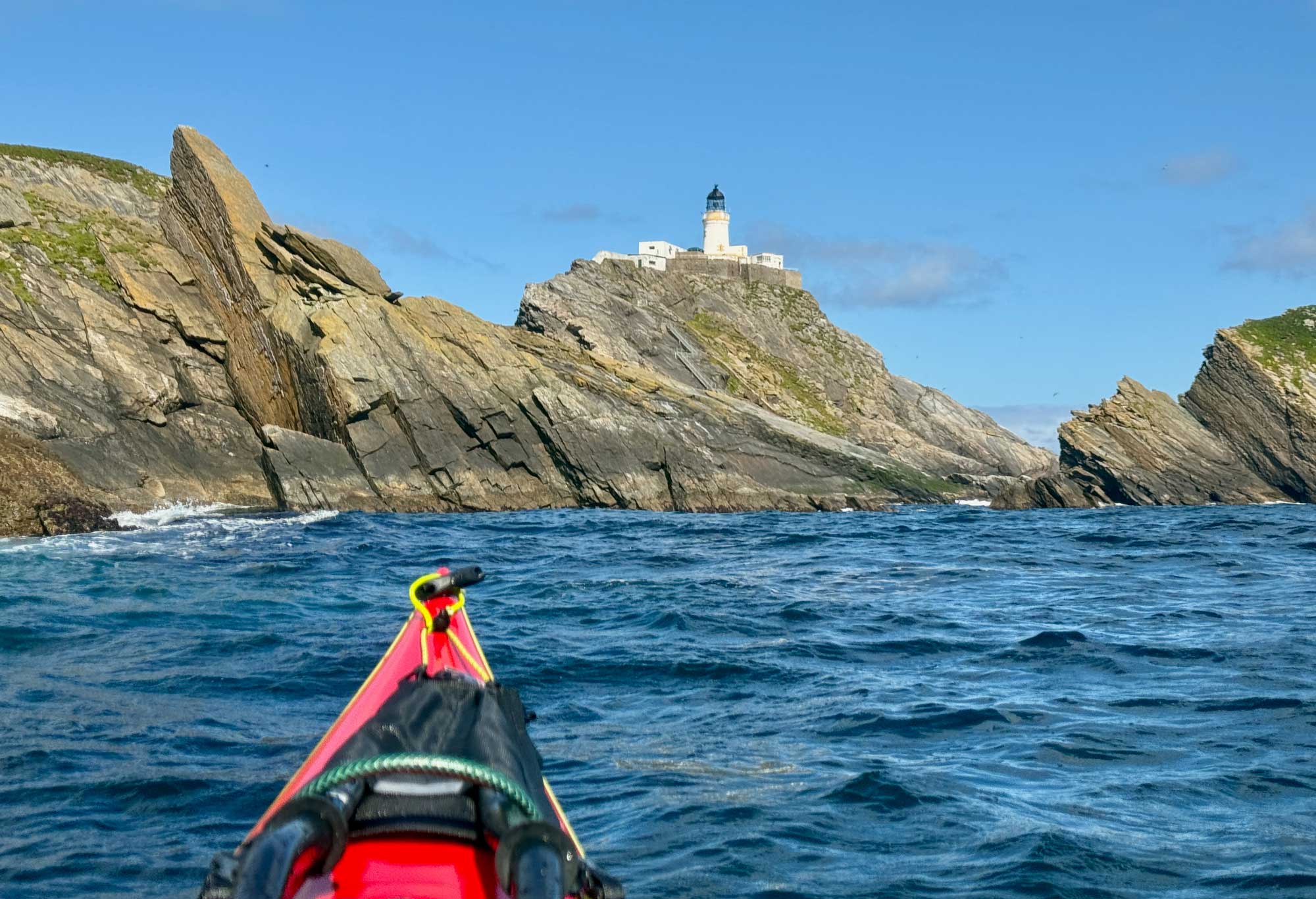
Approaching Muckle Flugga, the landing steps up to the lighthouse are visible.

Over the years I’ve learnt that sea kayaking in Shetland is all about playing the long game. The weather decides what you paddle, not your ambitions. With near-constant winds and swell for much of the time, opportunities to paddle some of the more spectacular exposed sections of coastline are few and far between. With this in mind, there has been one particular trip I’ve waited years to make. If Shetland is the icing on Scotland’s sea kayaking cake, then Muckle Flugga is the cherry on top. Home to Britain’s northernmost lighthouse, it stands at the very edge of our world and can only be reached when weather, wind and tide finally align.
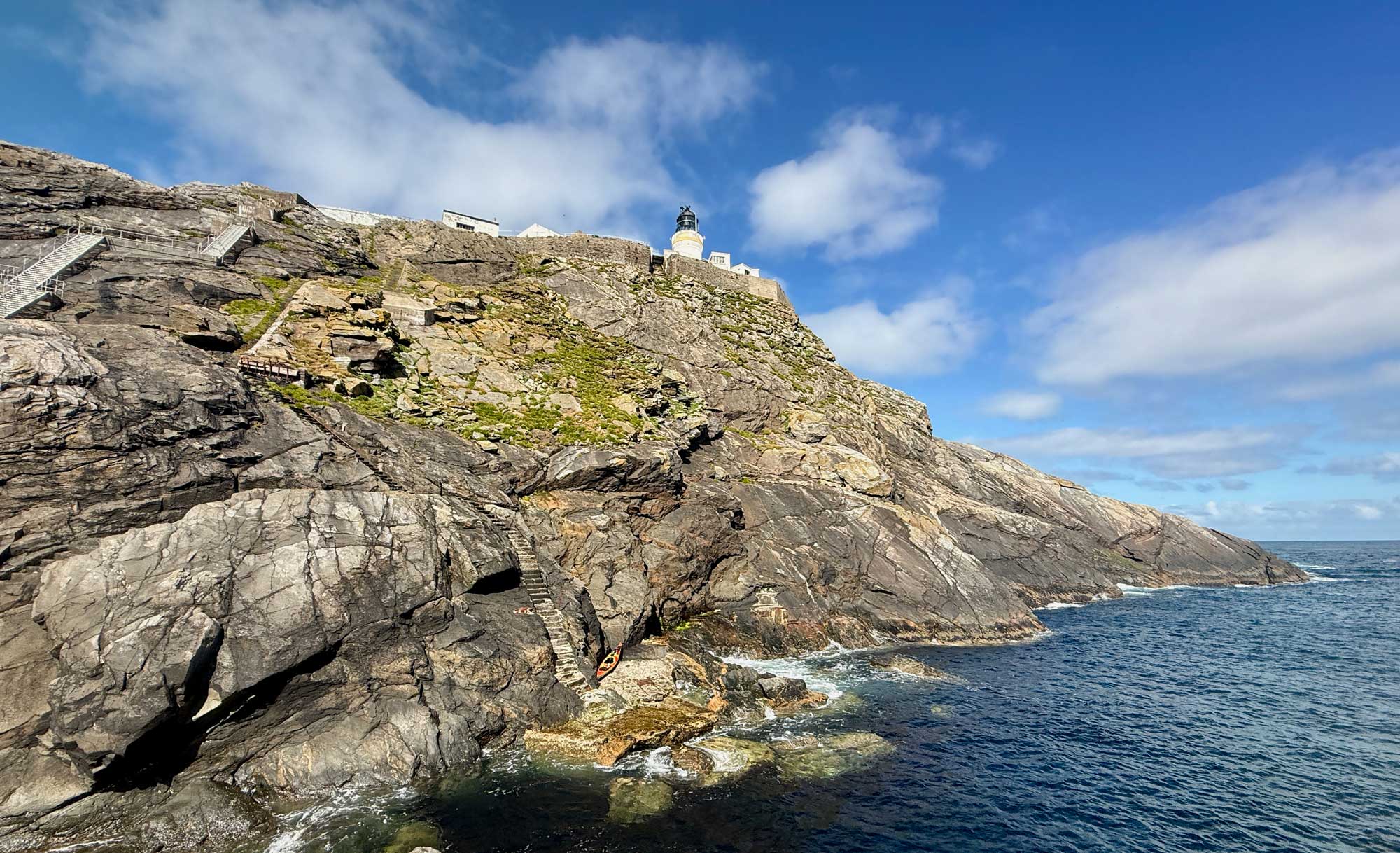
The landing, my Volan tied off temporarily before being carried up to the higher ledge.

With time to spare after the symposium, a rare weather window was apparent in the forecast; so, ferries were booked, and we headed to where the road ends, on Shetland’s most northerly island, Unst. It was a small window of opportunity, but with blue skies and sunshine, I headed off from the Lighthouse Shore Station with Muckle Flugga my hoped-for destination. Rounding Hermaness, the scale of the place became impossible to ignore. The Atlantic stretched away to the west, the North Sea to the east. Thousands of gannets wheeled overhead while relentless swell exploded against the cliffs. And this was considered a calm day.
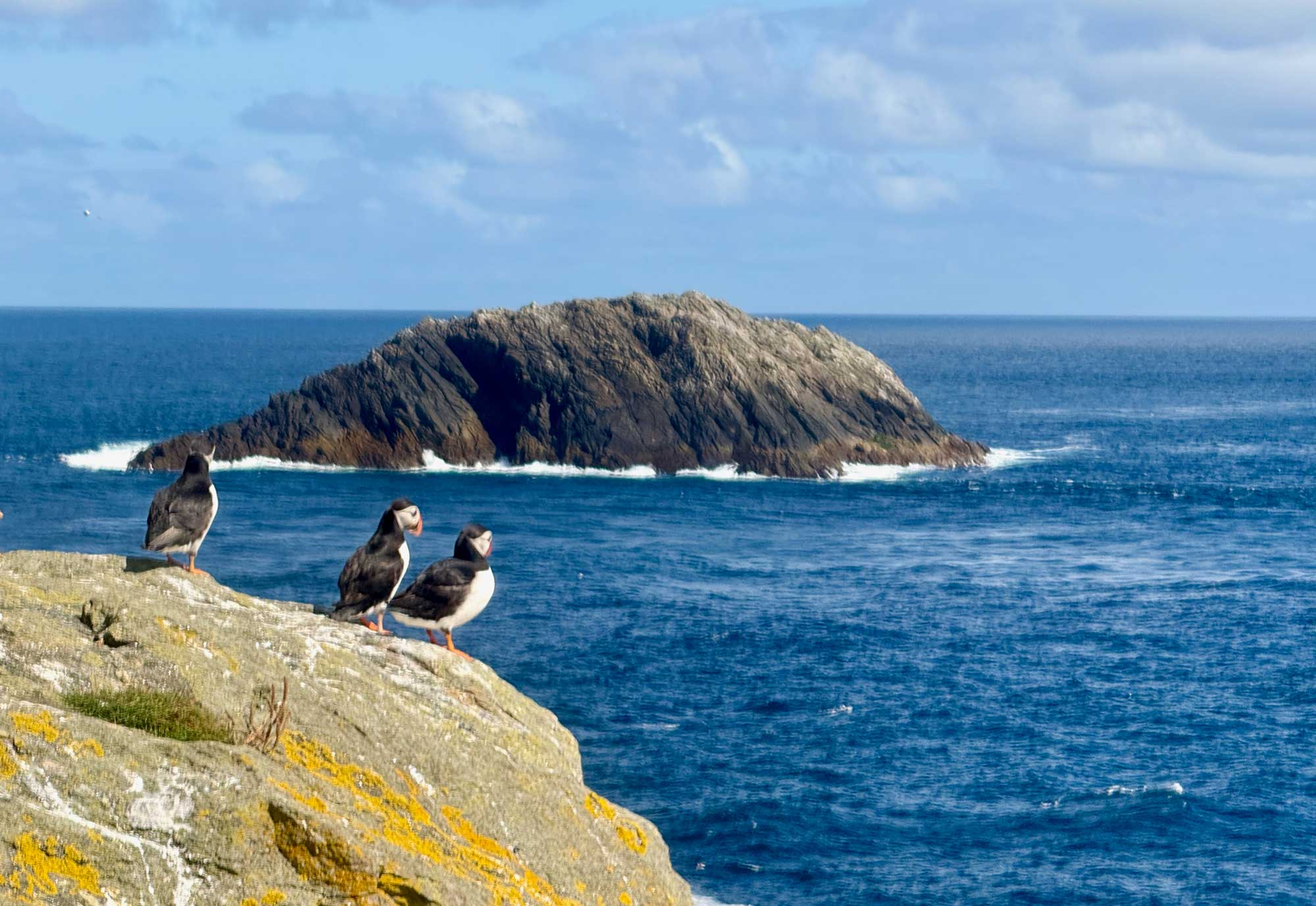
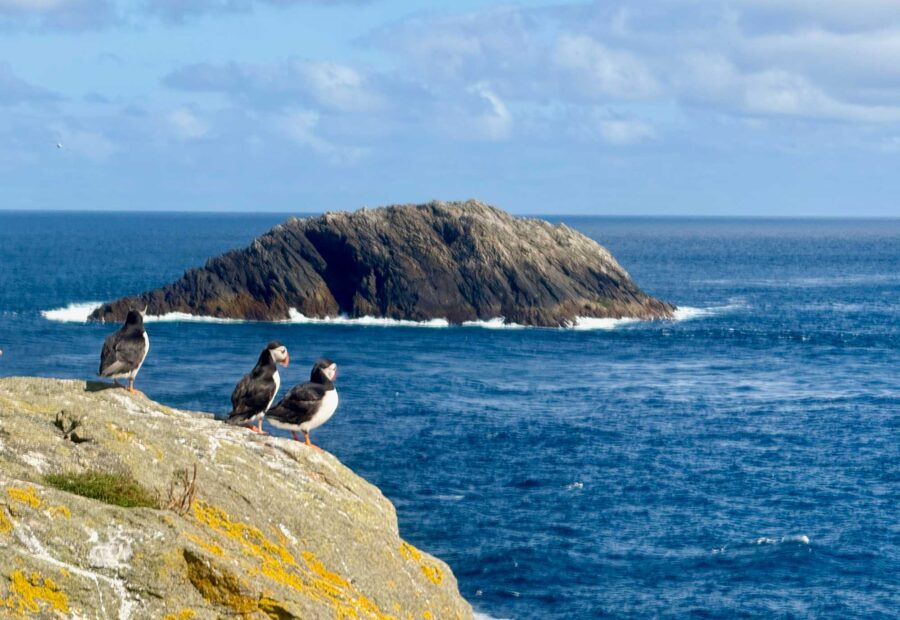
Puffins on route to the lighthouse; Out Stack, Britain’s most northerly point behind.

A kilometre offshore, the skerries that make up Muckle Flugga stood clearly visible, with the incredible lighthouse perched high atop the tallest skerries cliffs. Although only a short distance away, with up to 5 knots of tide, a funnelling Force 3-4 wind and the ‘small’ 1.4m swell, the crossing did not feel easy. Arriving in the lee of Muckle Flugga, sheltered from the wind and tucked into the tidal eddy, you’d think it was finally time to relax. It wasn’t! It was now time to find the notorious landing, which may or may not be possible depending on the swell and how brave I was feeling. Sitting beneath the old landing platform, I watched the swell. Every set mattered. Landing solo on Muckle Flugga isn’t something to rush, and I was weighing up whether I could get ashore without damaging either the kayak or myself. Eventually a gap appeared. Fingers crossed, I committed. A few seconds later I was standing on Muckle Flugga.
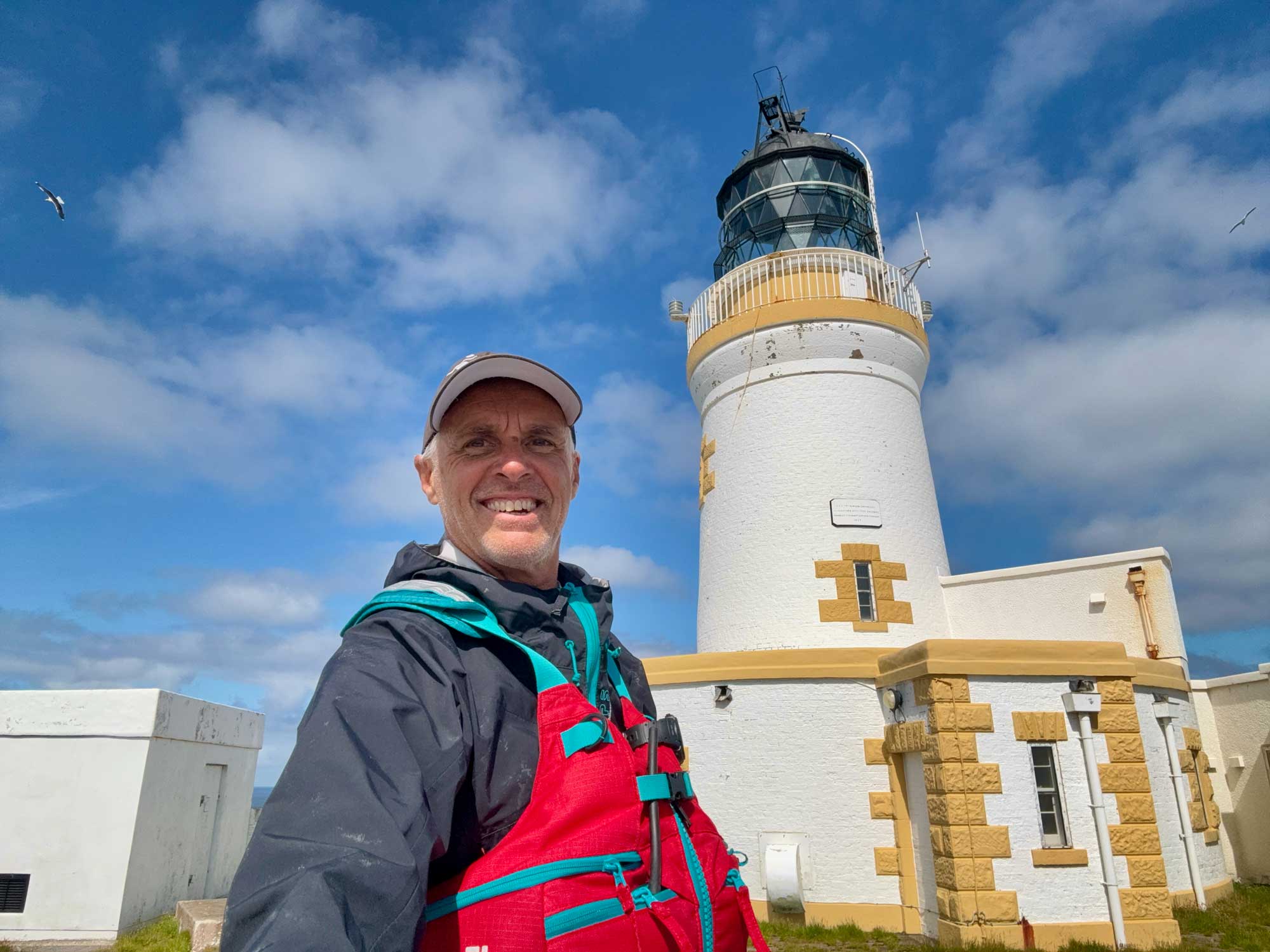
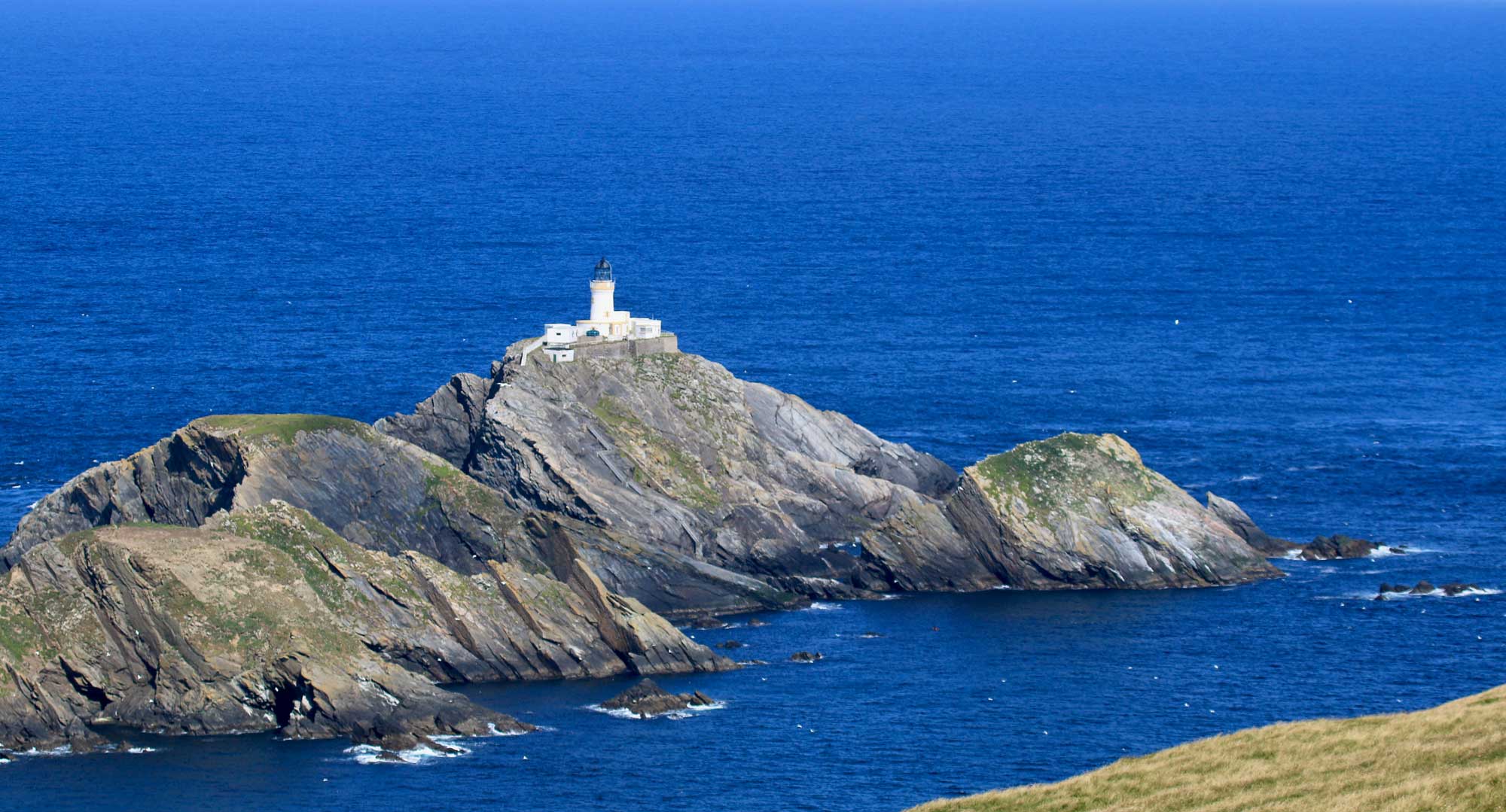
Muckle Flugga lighthouse – the wait had been worth it!

I was particularly glad to be paddling my Lightweight Volan. The first 30 of the 250 stone steps climb steeply from the landing to a ledge I wanted to carry my kayak up to, well above any incoming swell. With it safely secured, I could tackle the rest of the steep stone steps that lead to the lighthouse. It was an incredible, if slightly tiring, climb; passing numerous puffins, nesting fulmars and arctic terns en route. I arrived at the top of the steps to be greeted by the awe-inspiring Stevenson lighthouse, first lit in 1858. From here the views stretched south across Shetland and north into empty ocean. After years of waiting for the right conditions, I was finally standing at Britain’s most northerly lighthouse. It was time to take it all in and savour where I was, because it was without doubt somewhere truly special that not many have been fortunate enough to enjoy; particularly in the sunshine!
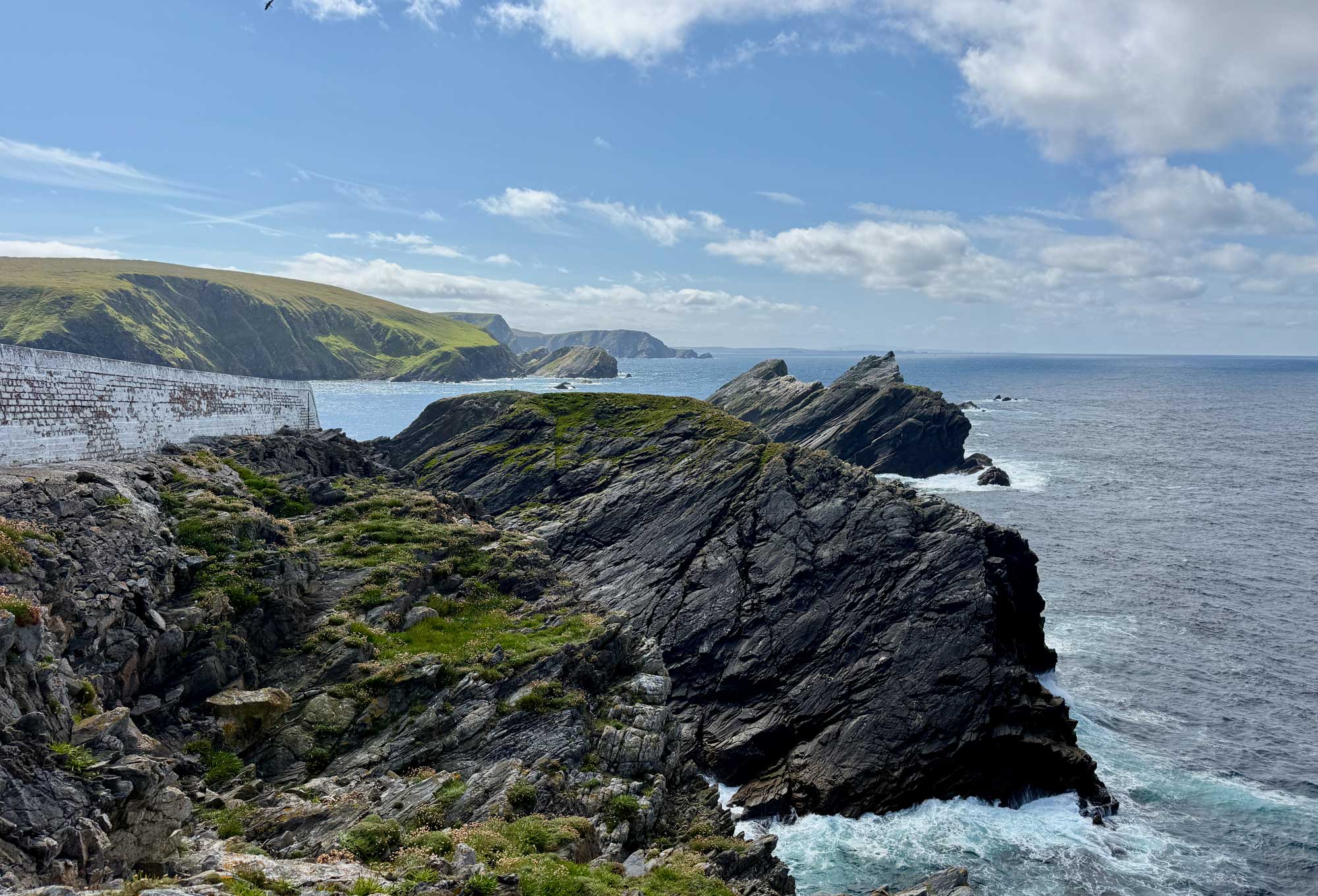
View from Muckle Flugga south to Unst and the rest of the Shetland Islands.

With the relentless swell refusing to abate, it was soon time to return down the steps to tackle the launching; it was all well and good getting onto Muckle Flugga, but to be successful I now had to get off! I was not allowed to leave easily, but despite a bit of sponging out required, boat and body were intact and head was dry; so, all was good. As the tide, wind and swell carried me back towards Unst, I found myself reflecting on what sea kayaks make possible. Some journeys are memorable because they’re difficult; others because they’re beautiful. Every now and then one manages to be both. Muckle Flugga had kept me waiting for many years, but in the end the long game was worth every moment.
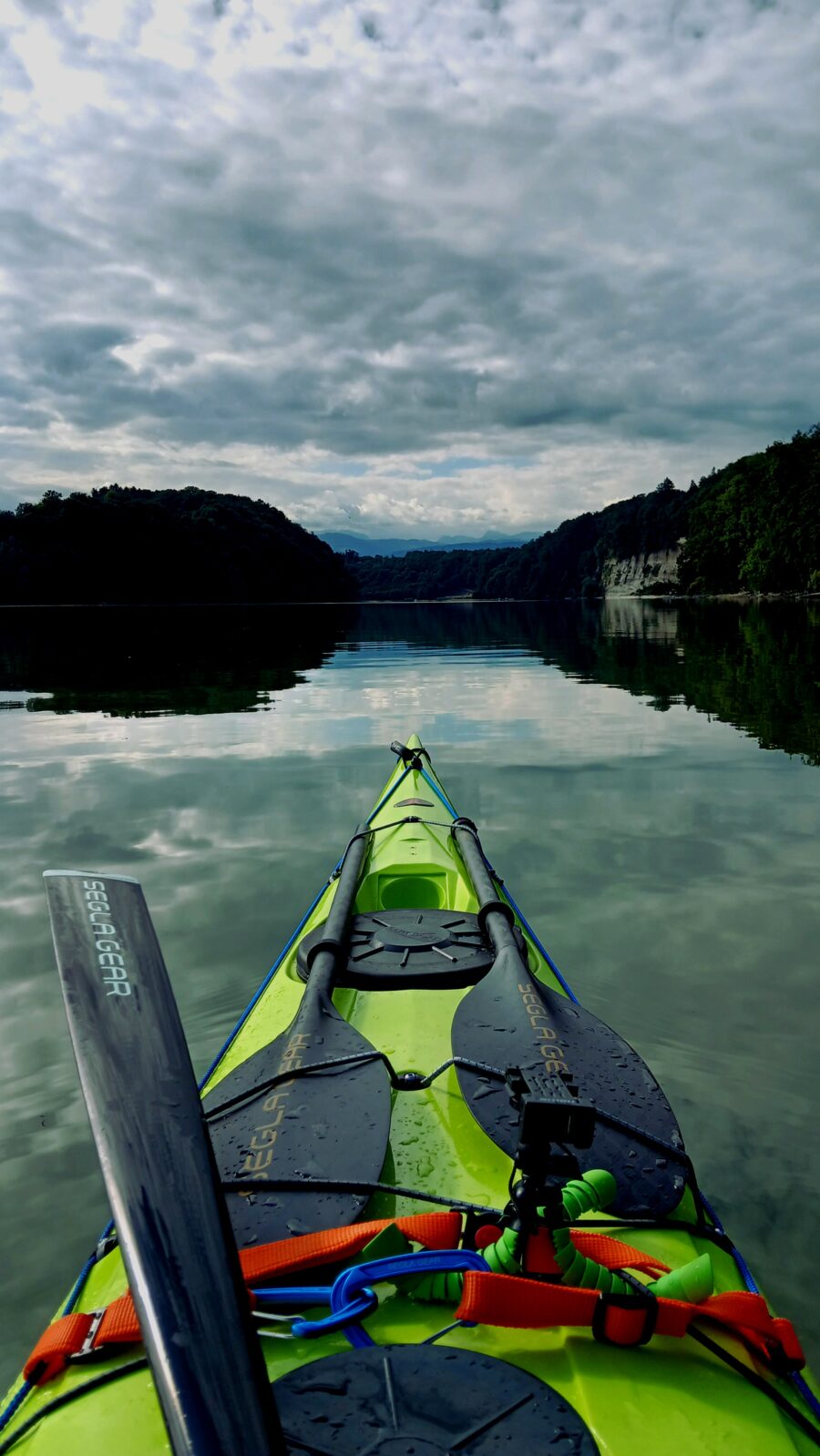
P&H Leo – The Underrated Secret Weapon of Sea Kayaks

Over the last 15 years, I’ve had the chance to paddle more than 20 different sea kayaks. From classic touring kayaks to uncompromising expedition boats made of carbon or fibreglass, I’ve tried them all. Every boat has its own character. Some make an immediate impression, whilst others take a bit of time to grow on you. And then there are boats like the P&H Leo – a kayak that, in my opinion, receives far too little attention. For me, the Leo is arguably the most underrated secret weapon in the entire P&H range. It’s suitable as both a touring boat and a day or weekend boat. It’s playful, and you can use it to test your limits – without ever getting bored.

A boat that instantly inspires confidence!

Anyone sitting in the Leo for the first time immediately realises what sets this boat apart: impressive initial stability. Beginners in particular feel safe from the very first moment. The boat conveys a sense of calm and control without feeling sluggish. But the Leo can do much more than just sit stably on the water. As soon as you lean the kayak on its edge, its excellent secondary stability becomes apparent. The Leo builds up a tremendous amount of confidence and provides clear feedback at all times. This is worth its weight in gold, particularly in waves, wind or choppy water. That’s exactly where it really comes into its own.

For beginners as well as experienced paddlers

What particularly impresses me about the Leo is its versatility. Beginners benefit from the high stability and the secure feeling it provides. The boat takes a lot of the uncertainty out of those first trips and makes getting started in sea kayaking much easier. Advanced paddlers, on the other hand, appreciate its reserves. The Leo can be edged precisely, surfed in a controlled manner and conveys an exceptionally safe feeling even in challenging conditions. It’s one of those rare kayaks that grows with the skill of its paddler. And it never gets boring.

Rolling? As smooth as butter.

Another aspect that never fails to impress me is the rolling. Despite its high stability, the Leo is incredibly easy to roll. The boat almost rights itself automatically and provides excellent support for the movement. Anyone looking to learn how to roll, or who needs to roll reliably in rough water, will quickly realise just how pleasant the Leo is to handle in this regard. I can say from experience that, for me, it’s the best rolling kayak from P&H!!!

CoreLite X – plastic redefined

Many paddlers automatically associate plastic kayaks with a soft hull and significant compromises in handling. In my experience, this is hardly the case with the Leo in CoreLite X. The hull is exceptionally stiff and provides a paddling experience on the water that comes surprisingly close to that of a laminated kayak. Of course, plastic never quite matches the stiffness of high-quality composite boats, but the difference is significantly smaller than many would expect. In return, you get a kayak that is considerably more robust against contact with rocks, landing on the shore or day-to-day transport. Anyone who frequently paddles on rivers, rocky coasts or at difficult entry points knows exactly how reassuring that can be.

The best alternative to a laminated kayak?

If someone were to ask me today what the best alternative to a laminated sea kayak is, my answer would be surprisingly clear: P&H Leo CoreLite X. You get a boat that is astonishingly stiff, has excellent handling characteristics and, at the same time, offers the robustness of a high-quality plastic kayak. Especially for those who don’t want to be constantly careful with their kayak, this represents a near-ideal compromise.

Skeg or Skudder?

The choice is yours. Another plus point is the choice of steering system. The Leo is available both with a classic skeg for those who like to paddle using edge control, and with P&H’s innovative Skudder – a combination of rudder and skeg – which can then be steered simply using your feet. This allows every paddler to choose the system that best suits their own paddling style.

Is a Skudder necessary? Not at all, as far as I’m concerned. I hardly ever need the skeg either. But, particularly in rough conditions, it can certainly come into its own.

Key specifications

In size MV:

Length: 487 cm / Width: 56 cm / Weight: approx. 27.5 kg in CoreLite X

In the HV size:

Length: 489 cm / Width: 59 cm / Weight: approx. 28 kg in CoreLite X

(At 189 cm and 92 kg, I opted for the HV version, which suits me perfectly.)

My verdict

The P&H Leo isn’t a boat that stands out with spectacular marketing claims. Perhaps that’s precisely why it’s so often overlooked. Yet it combines features that few sea kayaks offer in this combination: outstanding initial stability, enormous secondary stability, a surprisingly rigid hull, excellent rolling characteristics and a sense of security that is unrivalled, particularly in rough water. After over 15 years of sea kayaking and having paddled more than 20 different boats, the Leo is one of the most pleasant surprises I’ve ever encountered. It’s a kayak that doesn’t overwhelm beginners and doesn’t bore experienced paddlers. A boat that inspires confidence without losing its sporting pedigree. For me, the P&H Leo is the underrated secret weapon among P&H Sea Kayaks – and probably the best alternative to a laminated sea kayak when robustness and performance are equally important. Still unsure? Visit a dealer and give it a go. You’ll love it, I promise!

Powered by WordPress & Theme by Anders Norén