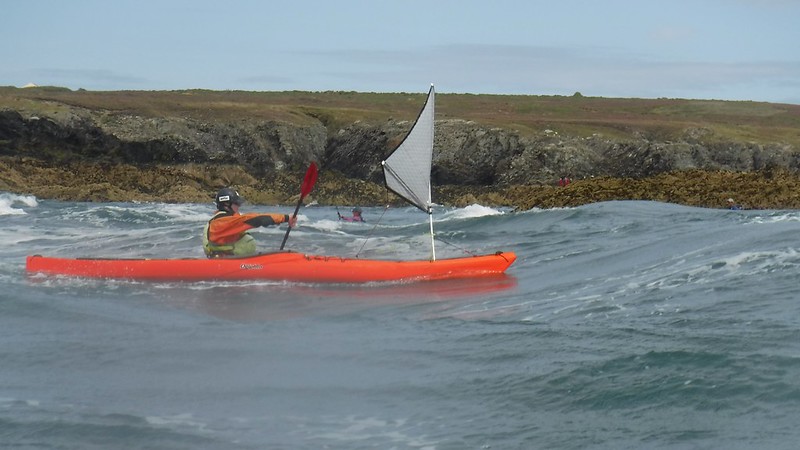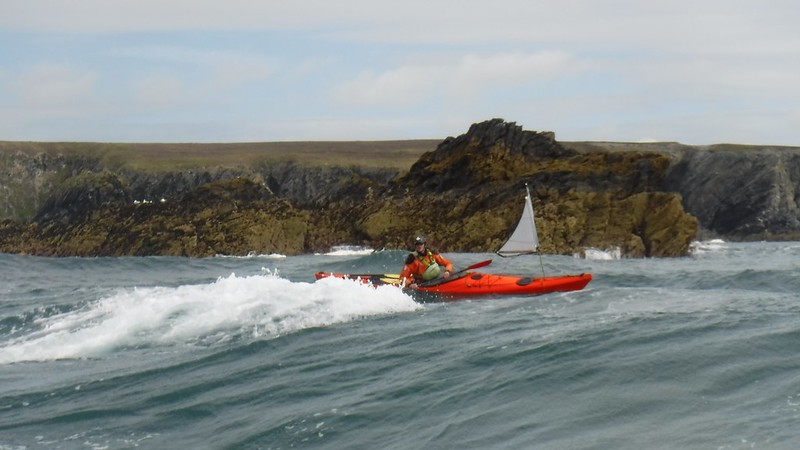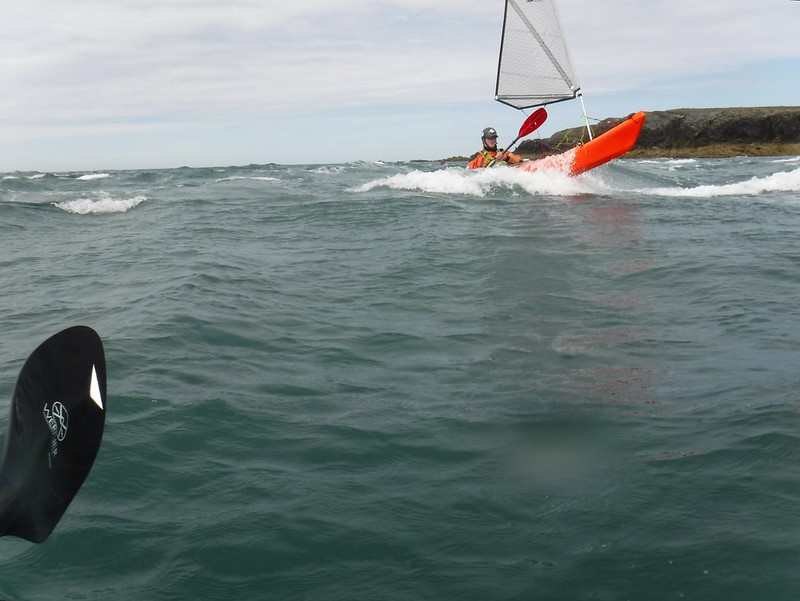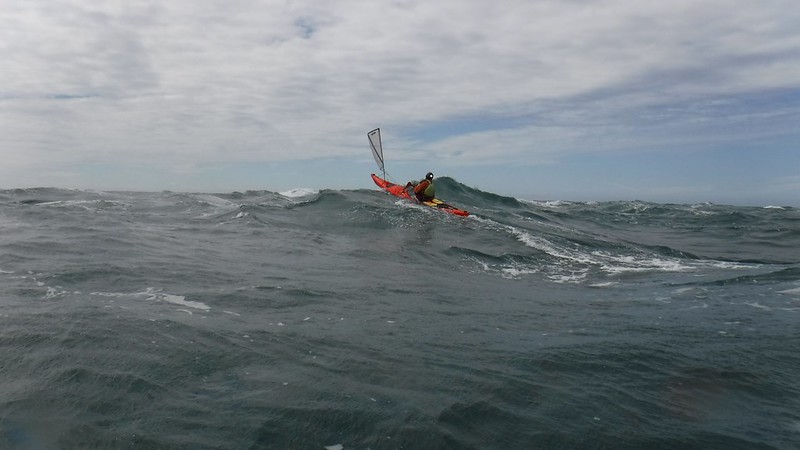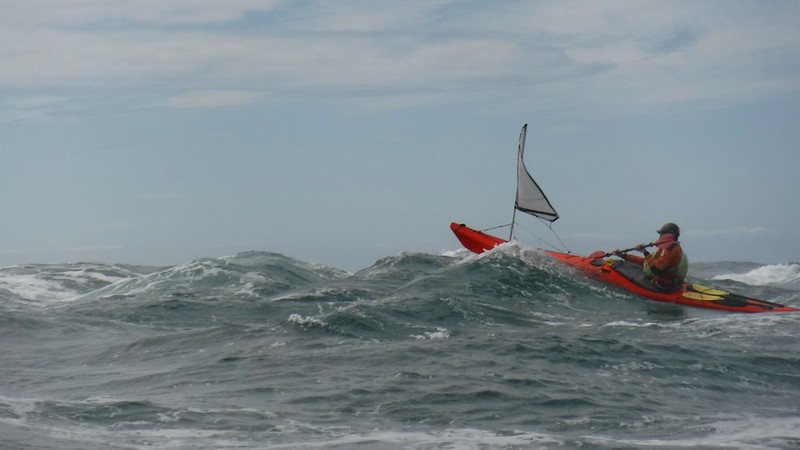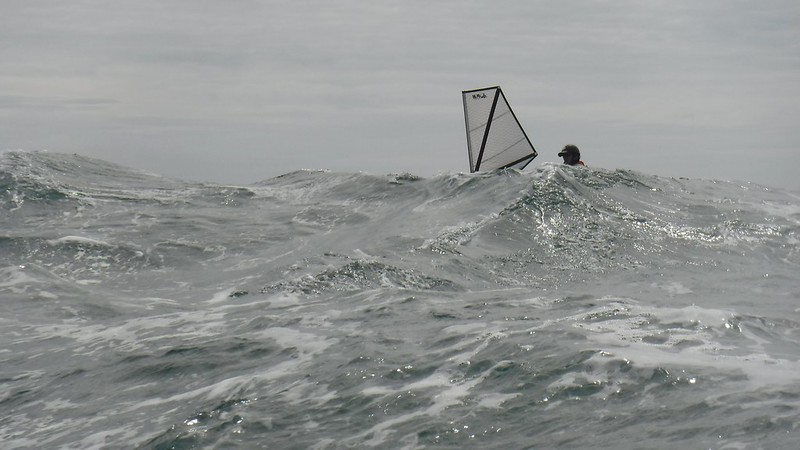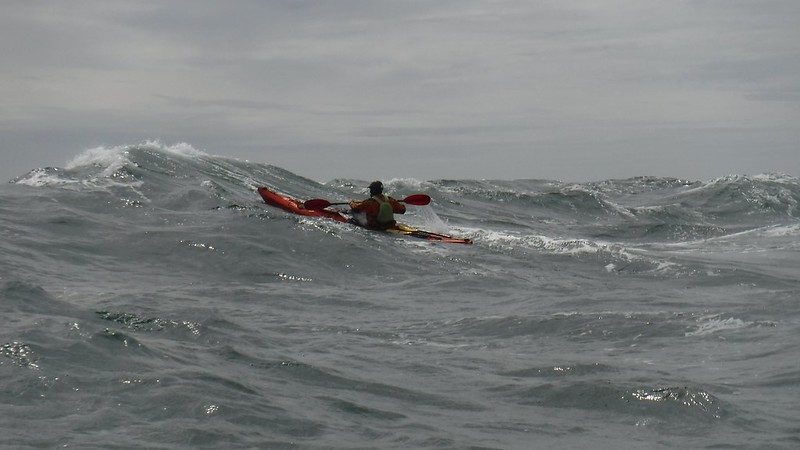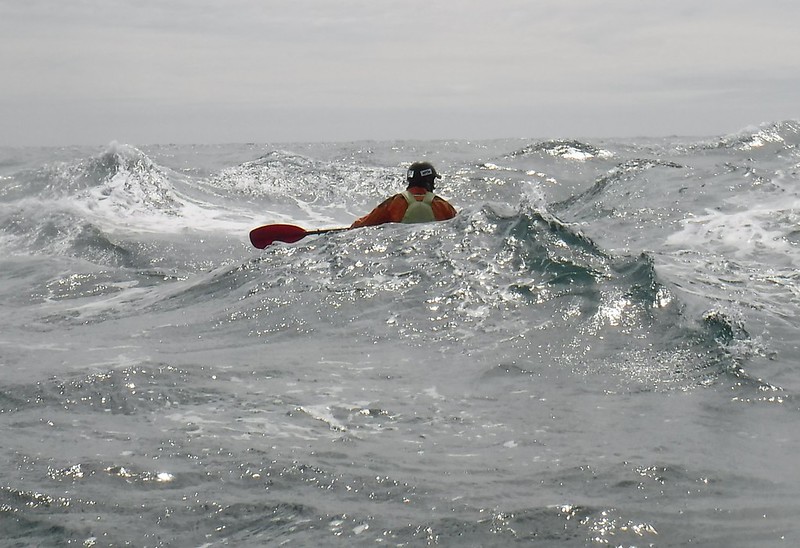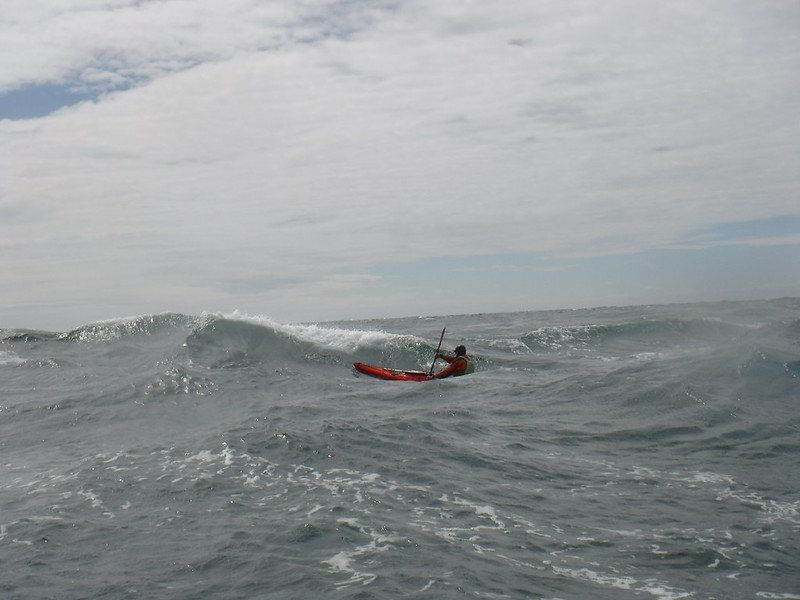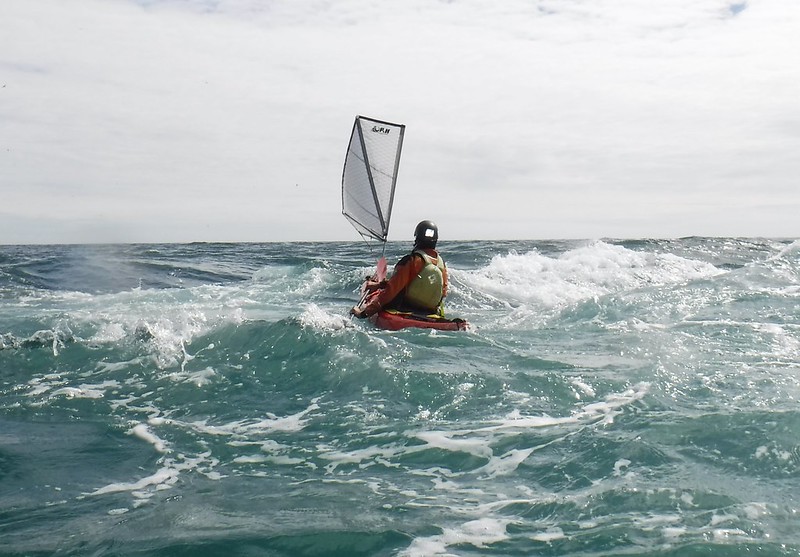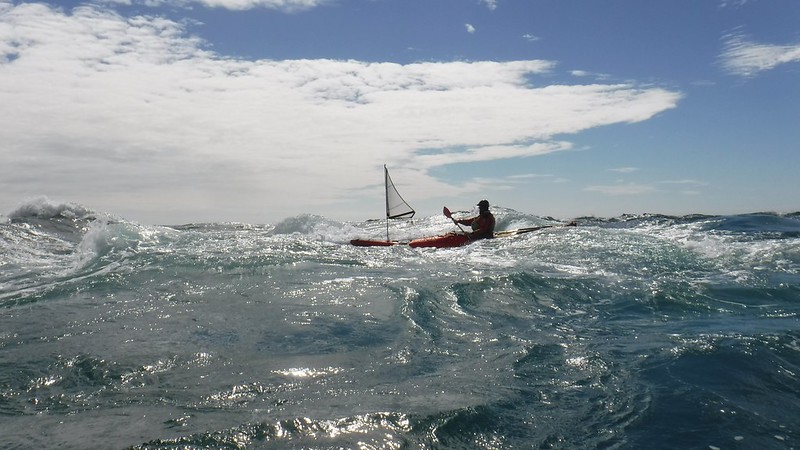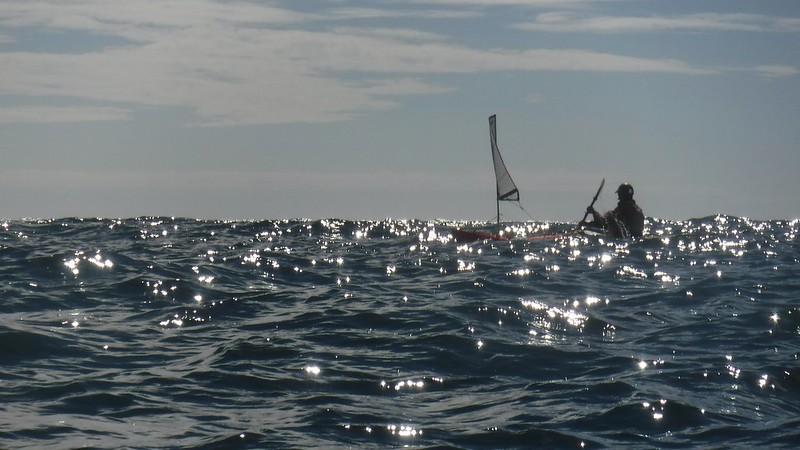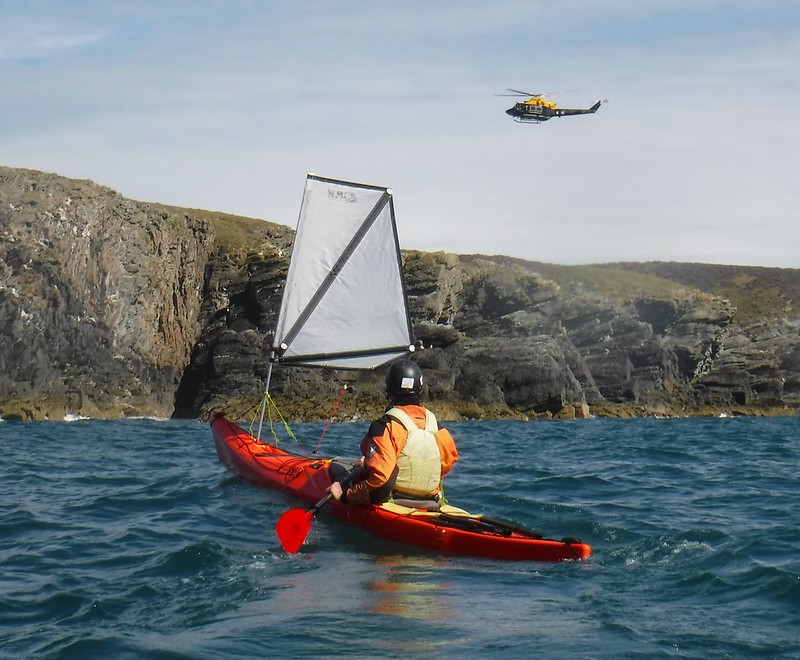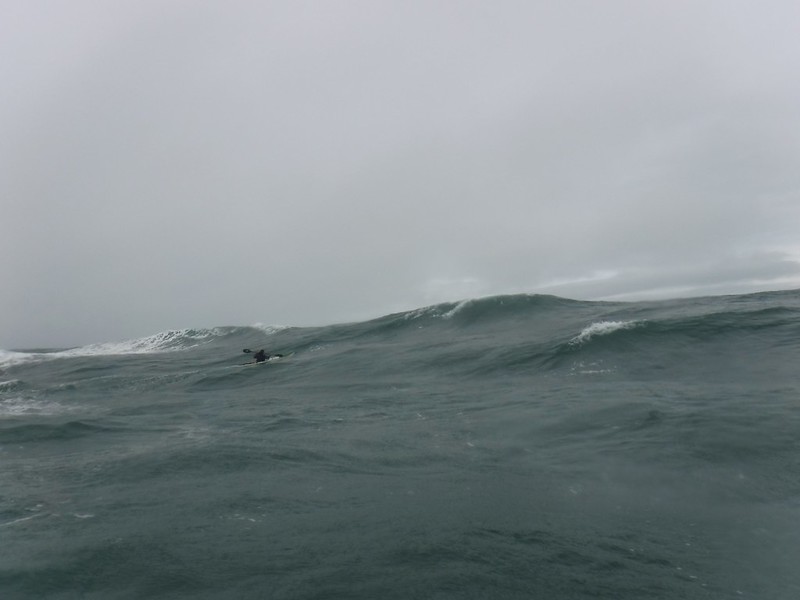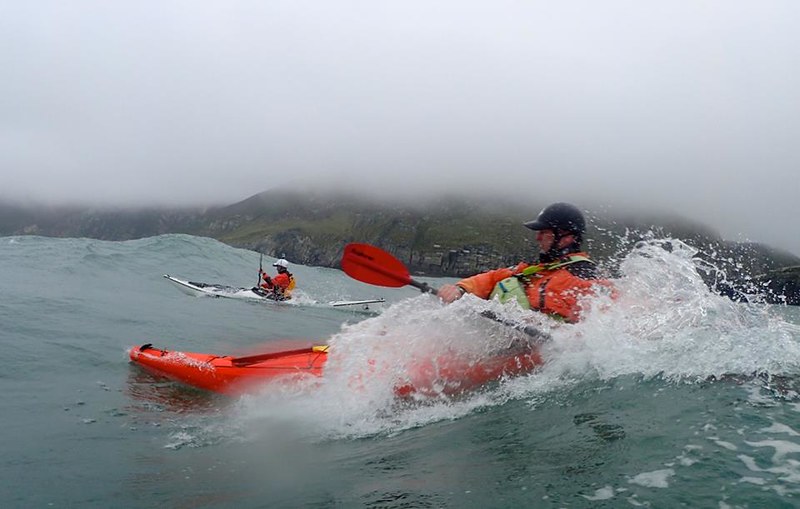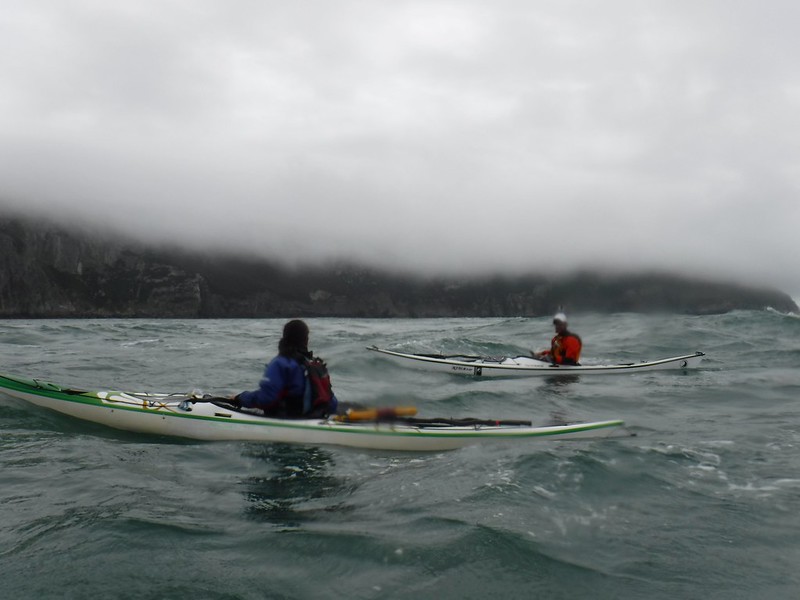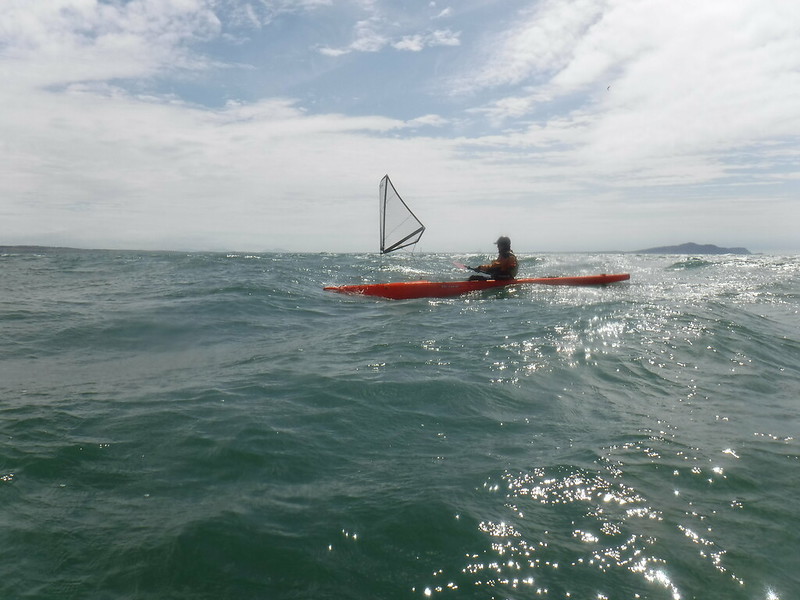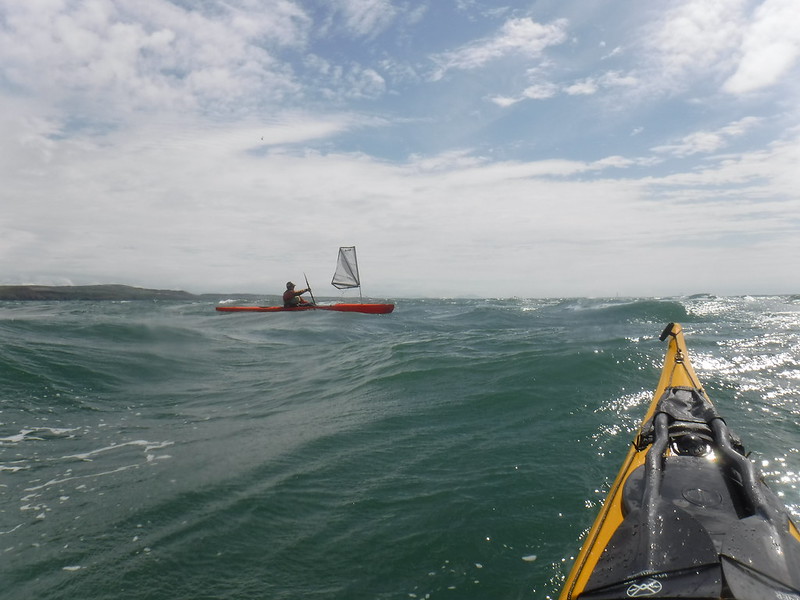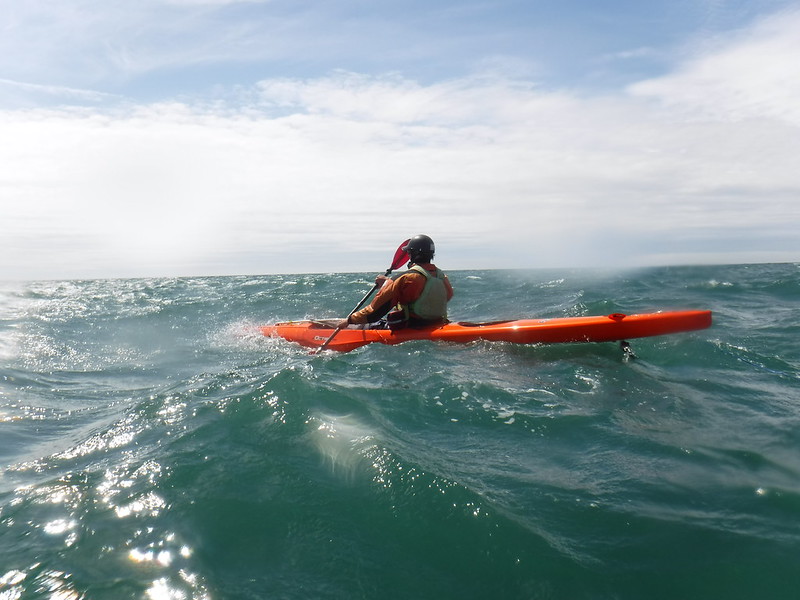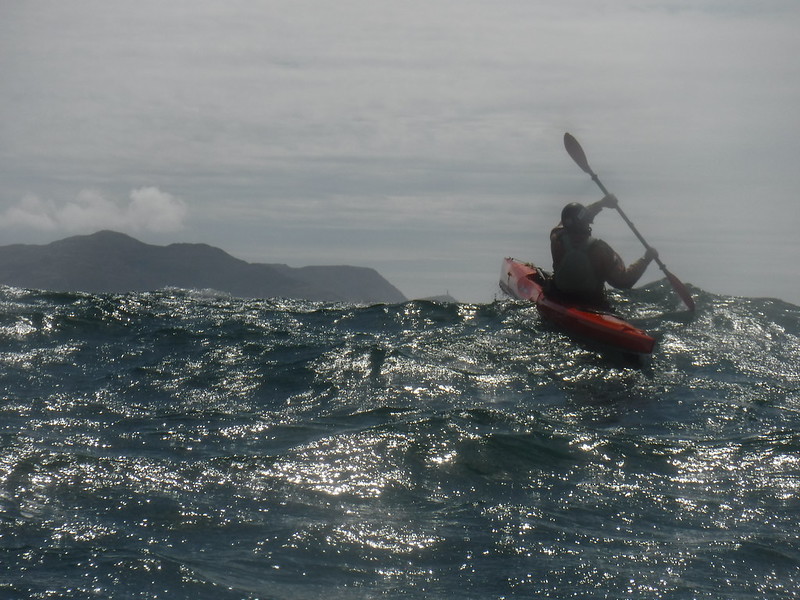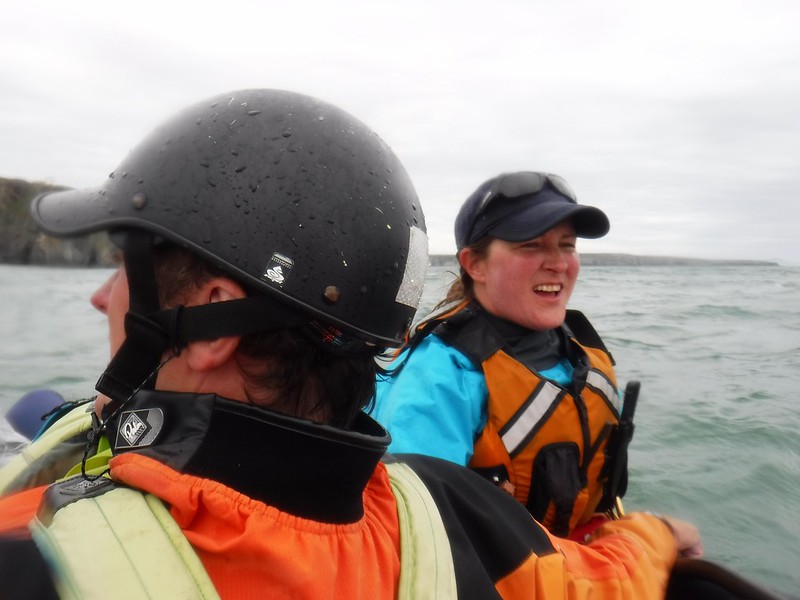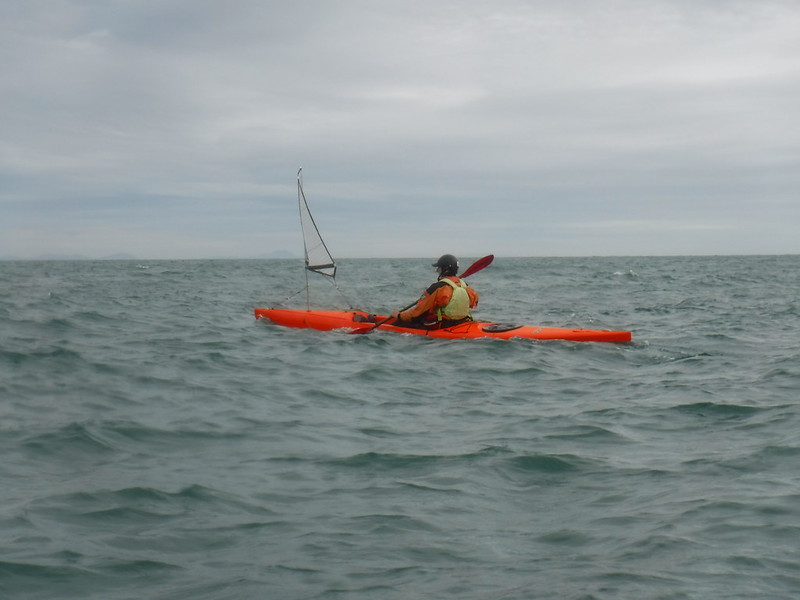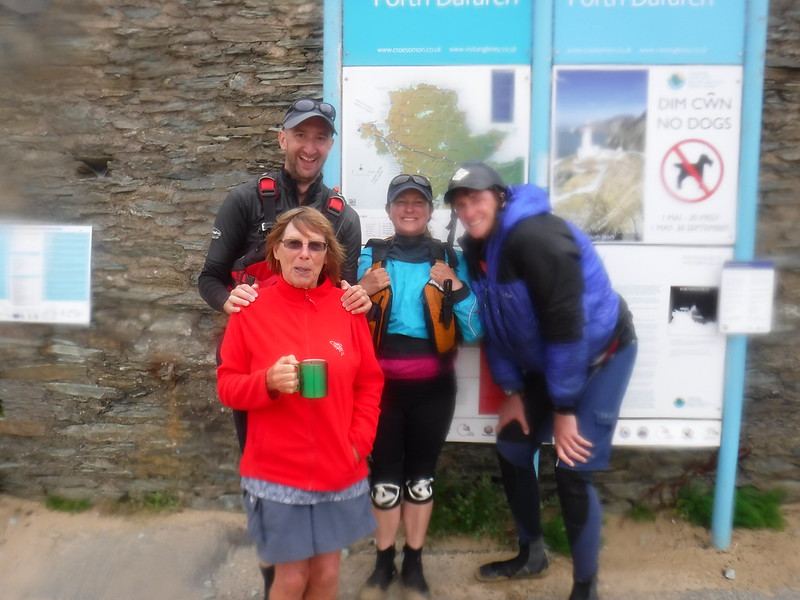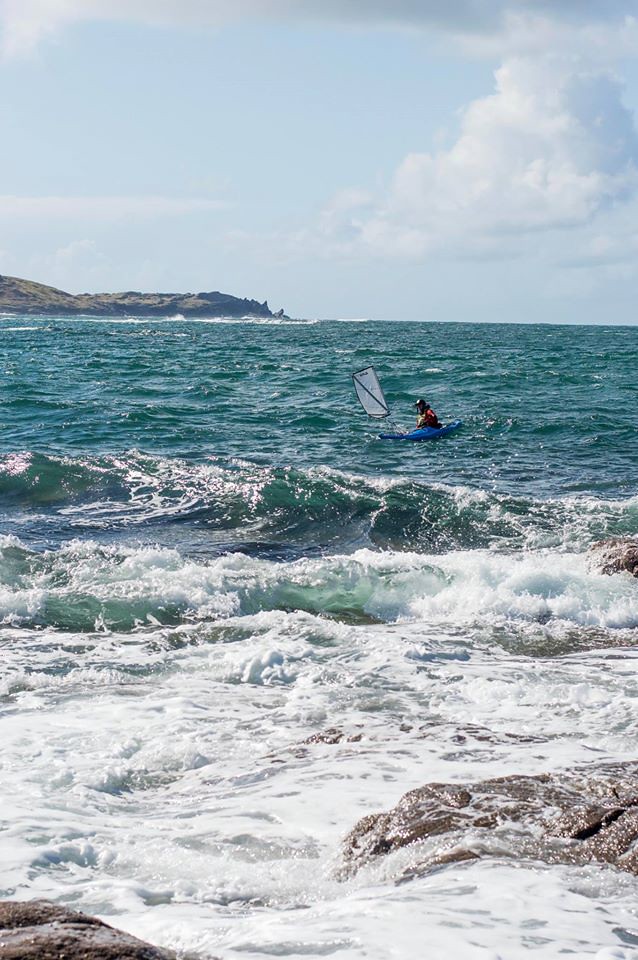
It has been a while since we have been on the water together. So today, we planned a little daytrip to Northern France, more specific Cap Gris Nez. It is located along the Dover Strait (Pas de Calais) on the French side of course and is known for its strong tidal current and fast changing weather. We planned on paddling near the rocks and cliffs around high water. While it was very sunny the first part of the trip, weather began to change very fast (within 30 minutes) and a sea fog set out all over the area. When in the neighbourhood with a kayak on the roof of your car, make sure to stop by and enjoy the scenery (and meet the grey seals that live there)!

South Pembrokeshire
West Coast of Ireland
Sea kayaks enable their users to explore and play on life-affirming journeys. Part of the challenge is to safely utilise the currents, swell and winds. The direct energy of the wind has been largely unused by most modern sea kayakers. In recent decades sailing rigs have become far more manageable to use on sea kayaks and their distribution/availability outside of Australia and New Zealand is only now becoming a reality. This exciting development is opening up brand new sea kayaking opportunities and challenges for all. From downwind coastal runs to traversing huge exposed island chains, like the Aleutians, sea kayak sailing is putting bigger smiles on people’s faces and aiding in epic journeys.
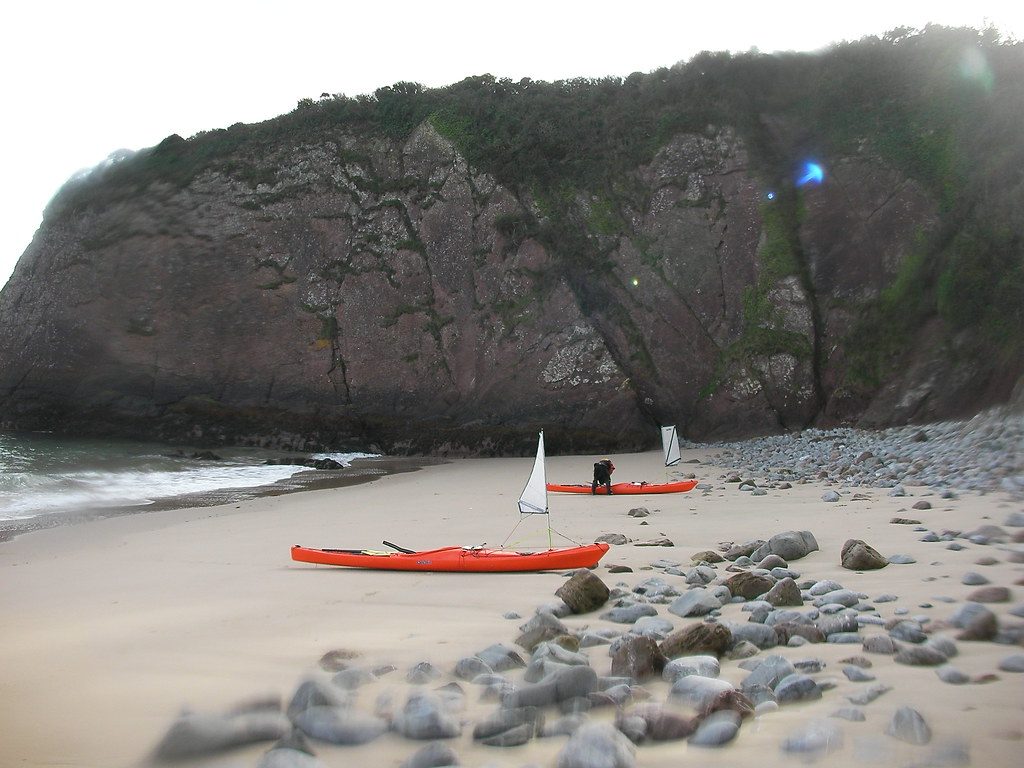
Tropical beach on Caldey Island
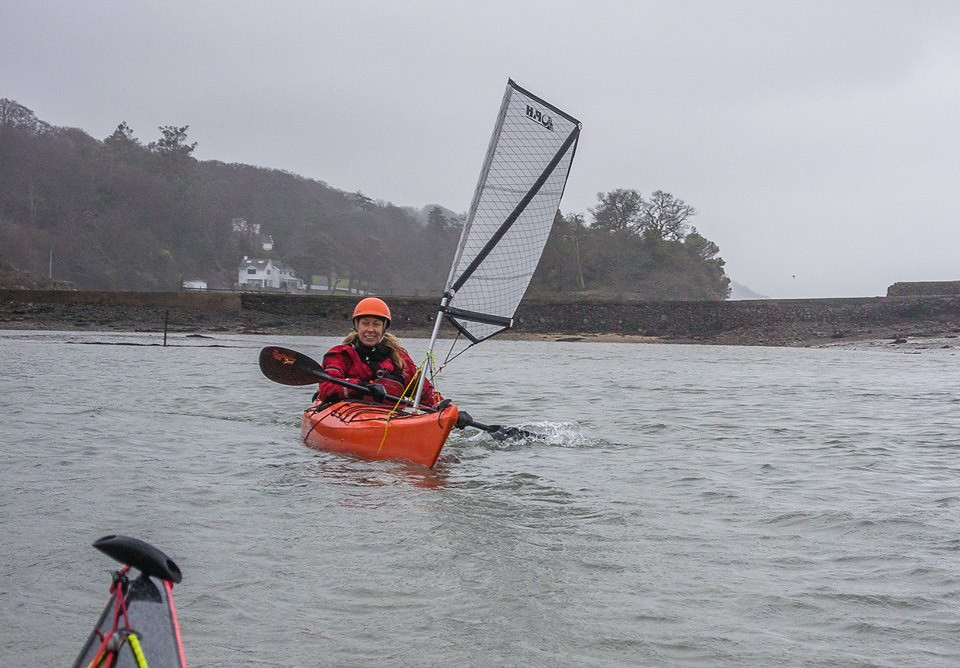
Windy day at Cadnant Bay Menai Straits
History
Kayak sailing was invented in 1865 when John “Rob Roy” MacGregor designed and built a sailing kayak for his 1,000 mile journey along the inland waterways of Europe. Those early Rob Roy Kayaks subsequently evolved into the huge variety of kayak types that we know today. Sail equipped kayaks remained popular into the 1930s. In 1934, Alastair Dunnett and Seumas Adam (“The Canoe Boys”) used their sail equipped Lochaber kayaks on an impressive and pioneering journey to explore the west coast of Scotland.
Kayak sailing also became popular in continental Europe during the 1920s and 1930s. In 1928 Franz Romer kayak sailed across the Atlantic from Lisbon to Puerto Rico. He attempted to continue his journey onwards to New York but went missing, presumably killed, in a hurricane. Oskar Speck’s similarly epic seven year kayak sailing trip from Germany to Australia should have been widely celebrated as an amazing achievement. However, arriving at his destination in September 1939 he was interned for the duration of the Second World War.
Kayak sailing subsequently went out of fashion in Europe. Towards the end of the twentieth century sails were beginning to be developed for use on modern sea kayaks by Australia and New Zealand-based kayakers. Sea kayak sailing is now commonplace in these countries and is beginning to take hold in Europe and North America.
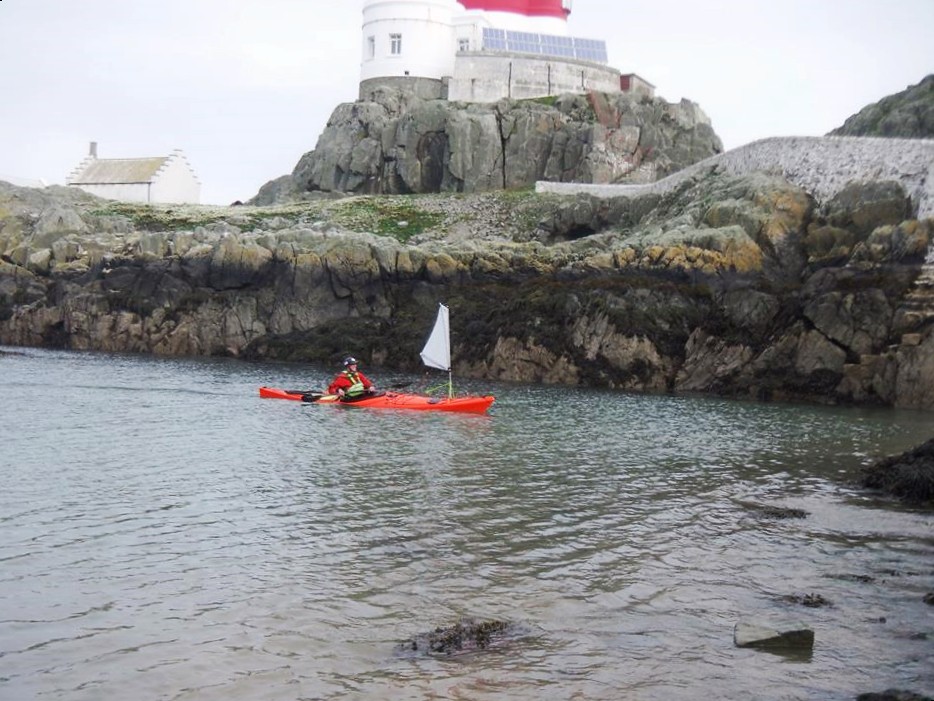
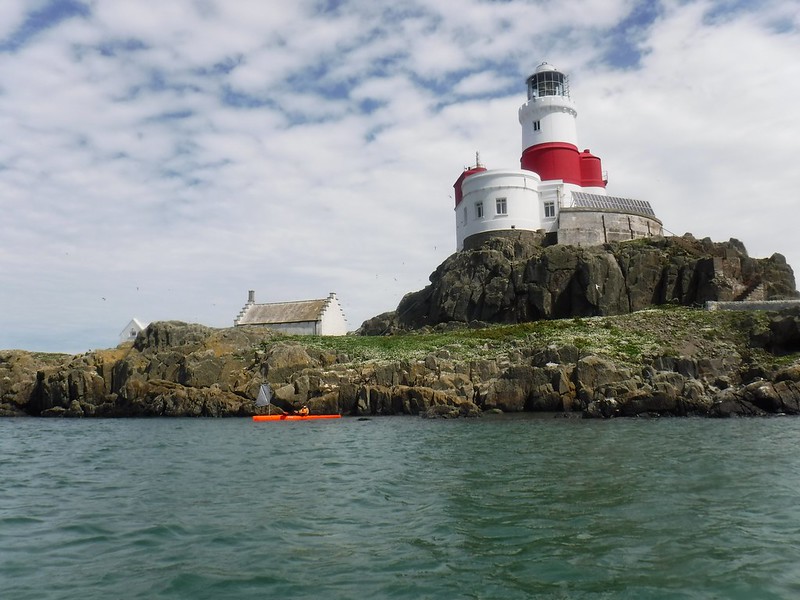
Skerries Lighthouse, Anglesey
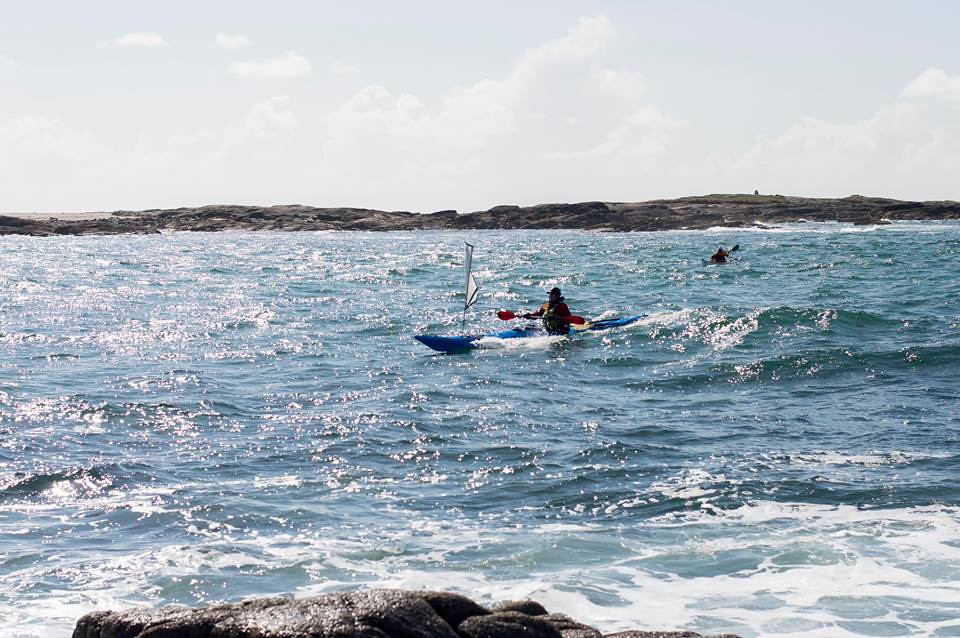
Surfing in Ireland
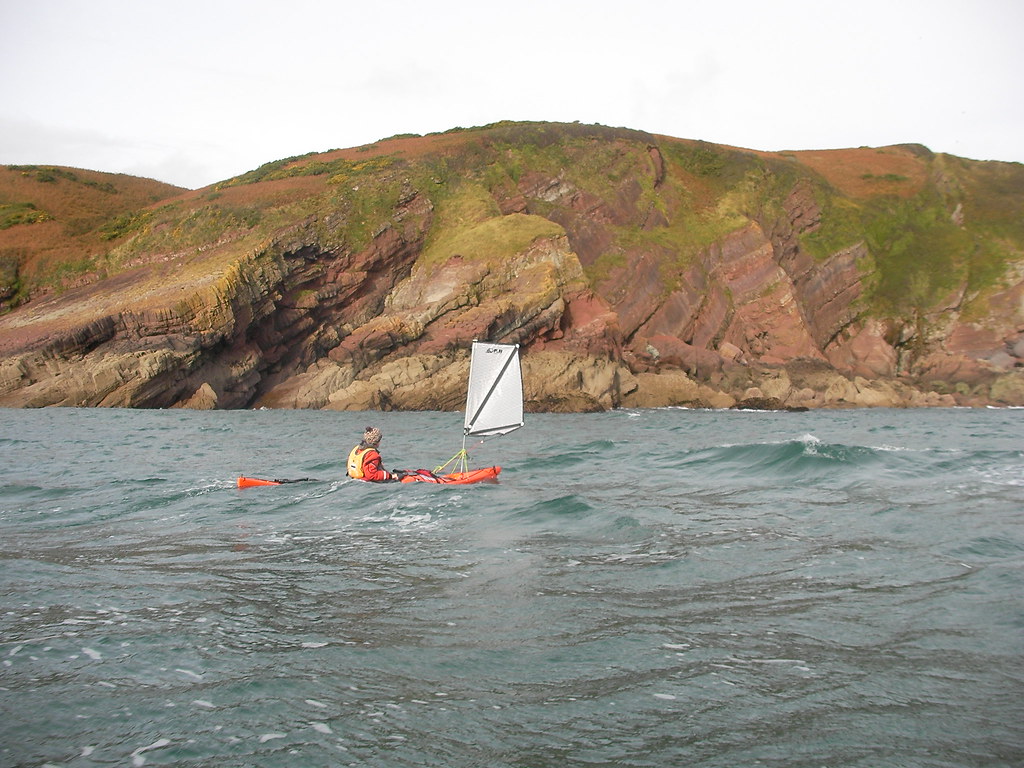
Surfing near Stackpole
Why sea kayak sail?
- Speed/endurance/fun
Maintaining the top displacement hull speed is easier when sea kayak sailing. It is also much easier to get your kayak planing in swell and tidal rapids. This is particularly useful when attempting to catch less steep waves. In essence you will catch more waves, considerably increasing your speed and range. Average speeds of 7 knots with planing top speed runs in excess of 10 knots are not unusual in conditions where it would be considerably more difficult for conventional sea kayaks to plane and maintain average speeds of more than 3-4 knots.
When the waves become too steep it is best to stow the sail away as it will no longer enhance the experience and will, most likely, become a liability.
- Enhanced safety
The sail appears triangular and conspicuous from afar and/or in overhead rolling swell.
The exposure of paddling along coastlines with less frequent safe landings is reduced if the wind and sail combine to add to the kayaks propulsion.
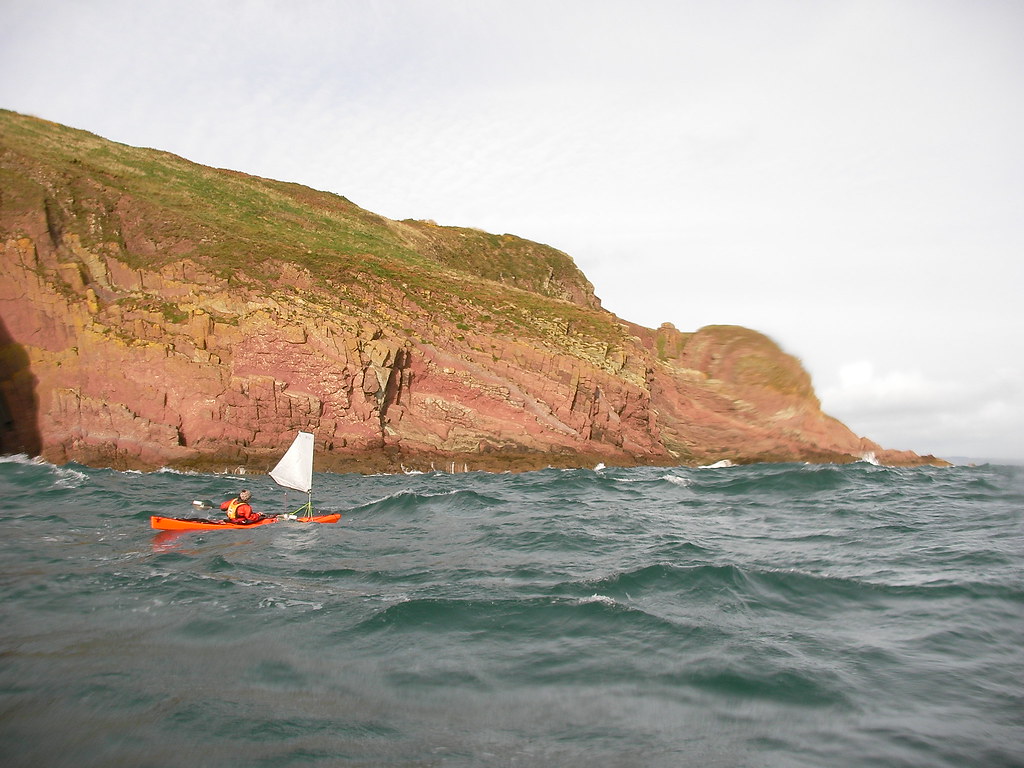
Caldey Island tiderace
Getting into sea kayak sailing
Equipment
The main airfoil sail available in Europe is the Flat Earth Kayak Sails range of airfoils. They are designed and manufactured in Australia by Mick MacRobb. Other airfoil sails are being manufactured for sea kayaks but they are far less common in Europe.
Sea kayak manufacturers
Many composite sea kayaks will need strengthening in order to accommodate a sail mast. You can assess this by pressing down on the deck near the compass recess and gauging whether there is much flexibility in the deck and hull. Most kayak companies will strengthen your kayak by special order. Plastic kayaks tend to be more robust in taking a sail mast.
Since 2012, P&H kayaks have produced all of their composite kayaks with enough strength to accommodate a sail mast. Their plastic Scorpio MKII range of sea kayaks has been designed with sailing in mind. It easily accommodates a Flat Earth Sail and handles superbly well when sailed.
Have a go/purchase
Scotland – Karitec are the main UK distributor of Flat Earth Kayak Sails and have a range of demo boats to try out under sail.
England – P&H have demo kayaks fitted with sails and attend many sea kayak symposiums.
Wales – Sea Kayaking Wales (SKW) are based on Anglesey and have a range of P&H sea kayaks and Flat Earth Kayak Sails to try out. SKW also run sea kayaking (including sailing) courses in Ceredigion, Pembrokeshire, Llŷn and the Gower. Flat Earth Sails are available to purchase from SKW.
More Information
http://seakayakphoto.blogspot.co.uk/ – An excellent blog written by, Douglas Wilcox, one of the most enthusiastic proponents of sea kayak sailing in Europe.
http://www.flatearthkayaksails.com/ – The most popular airfoil sail in the UK at present.
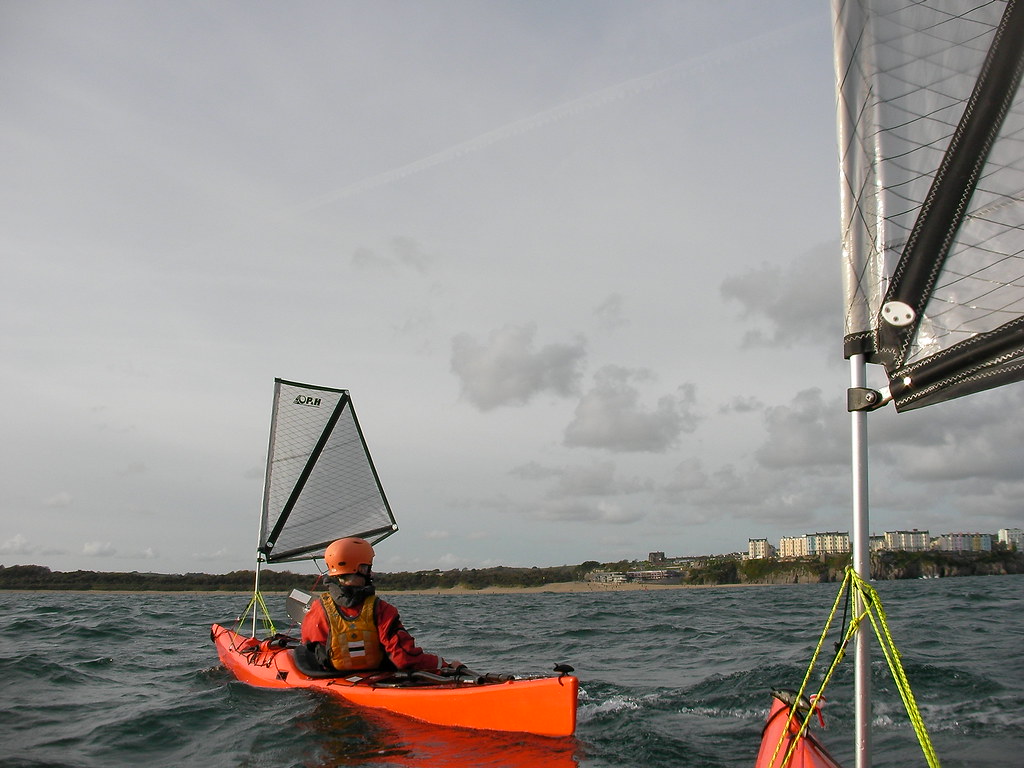
Tenby
Geth
www.seakayakingwales.com
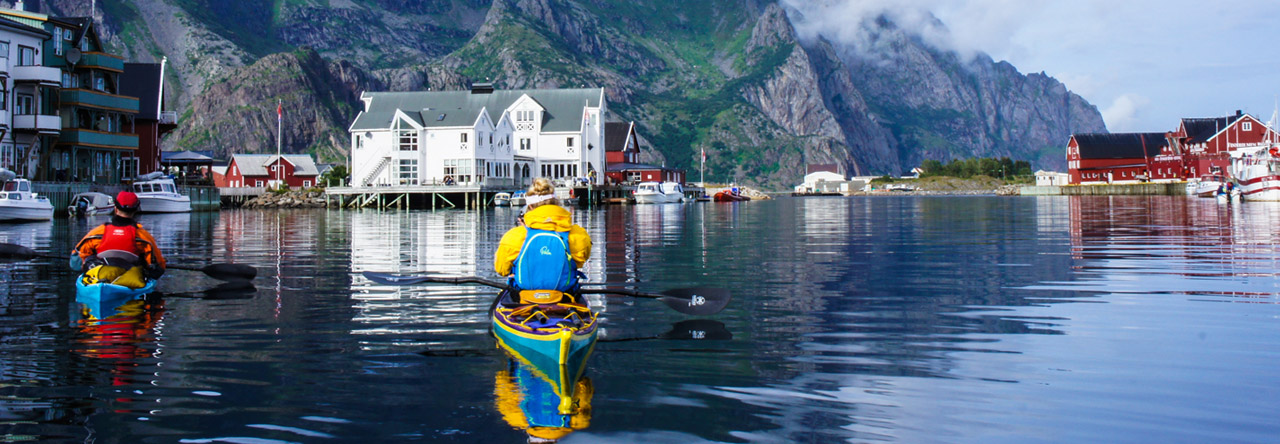
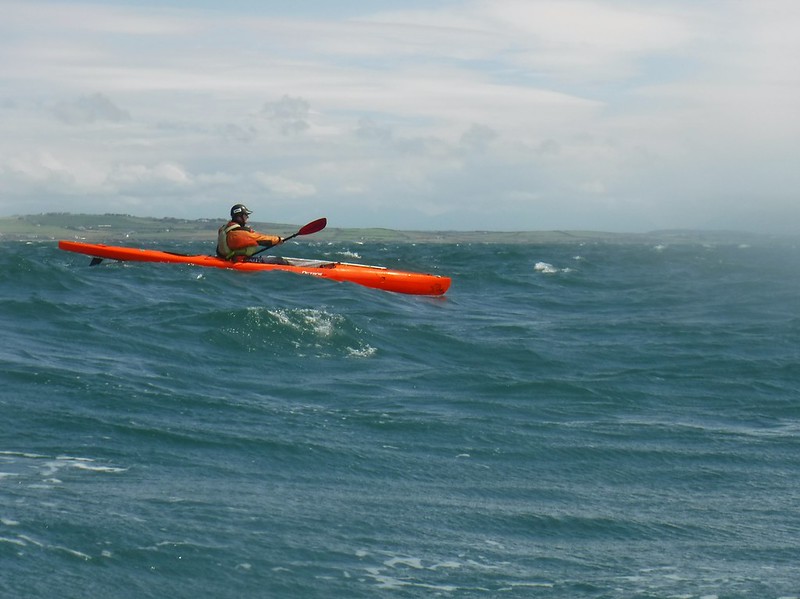
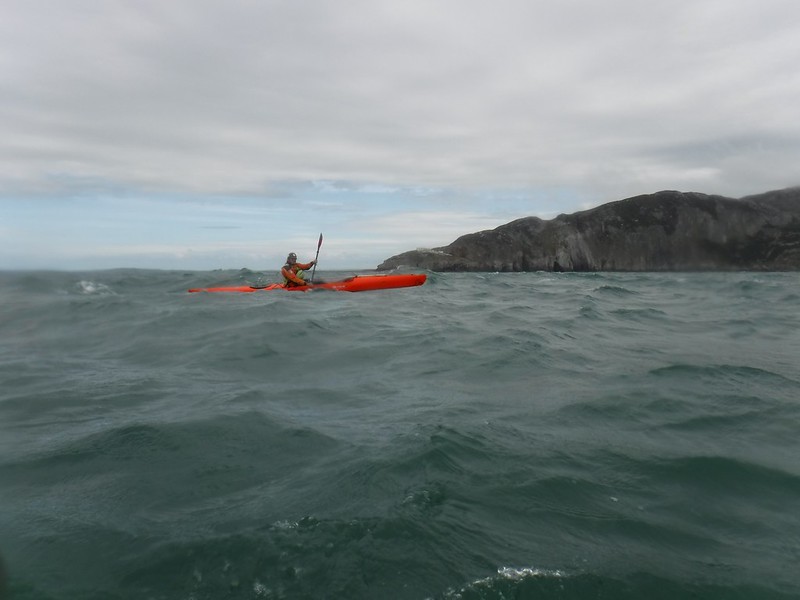
After paddling the Octane on Llyn Padarn I wanted to try it out at sea in wind, waves and moving water. My kayaking buddies for this trip were Ed and Abi Loffil.
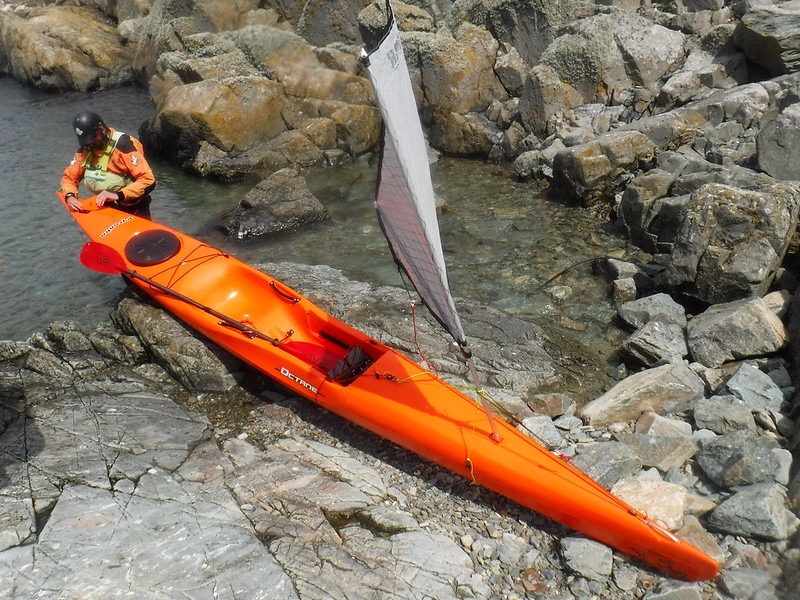
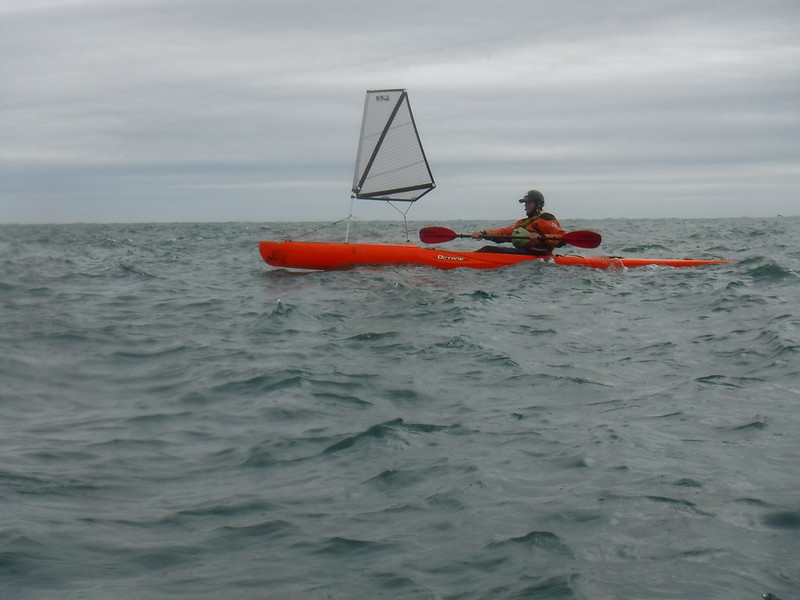
The Pyranha Octane with the Flat Earth Sail fitted
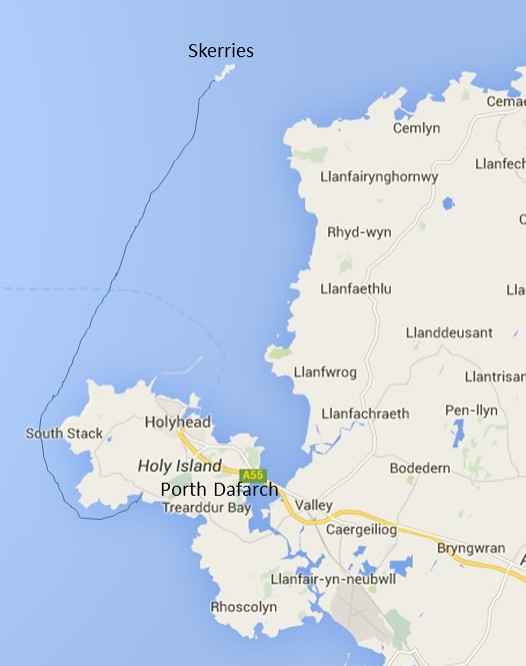
Ed and Abi had a head start on the outward leg so I followed them 20 minutes after their departure. This leg had up to 10 knots of southerly wind with a slightly post spring tidal current to propel us on the flooding tide to The Skerries. Time of leg – 1.5 hrs.
Approaching Penrhyn Mawr
Approaching the middle race of Penrhyn Mawr
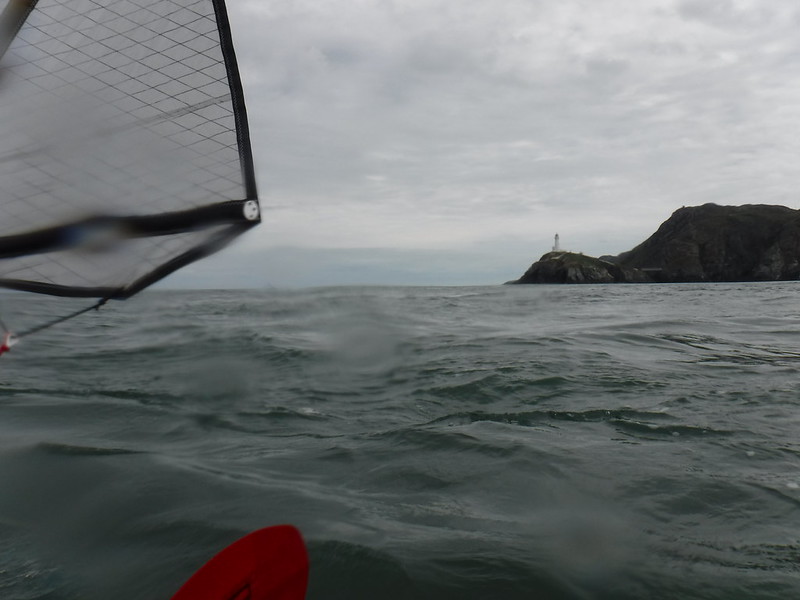
South Stack
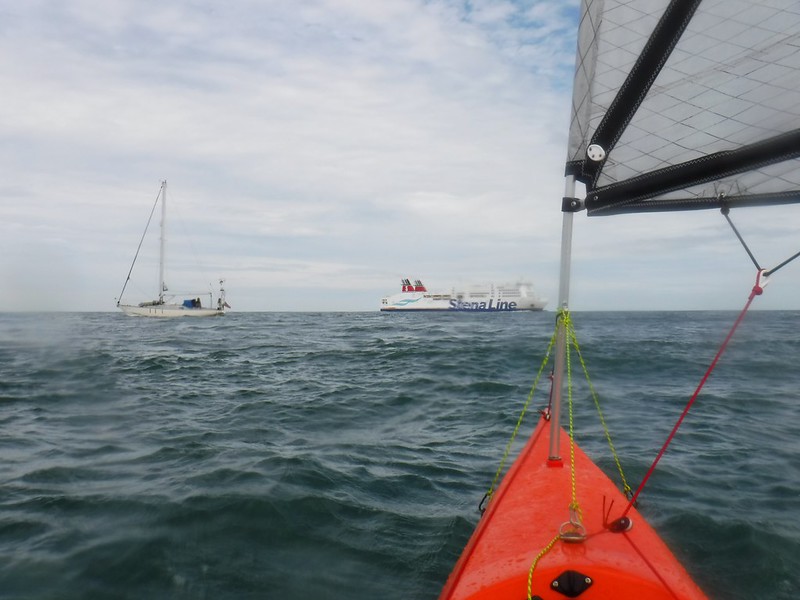
Rush Hour in Holyhead Bay
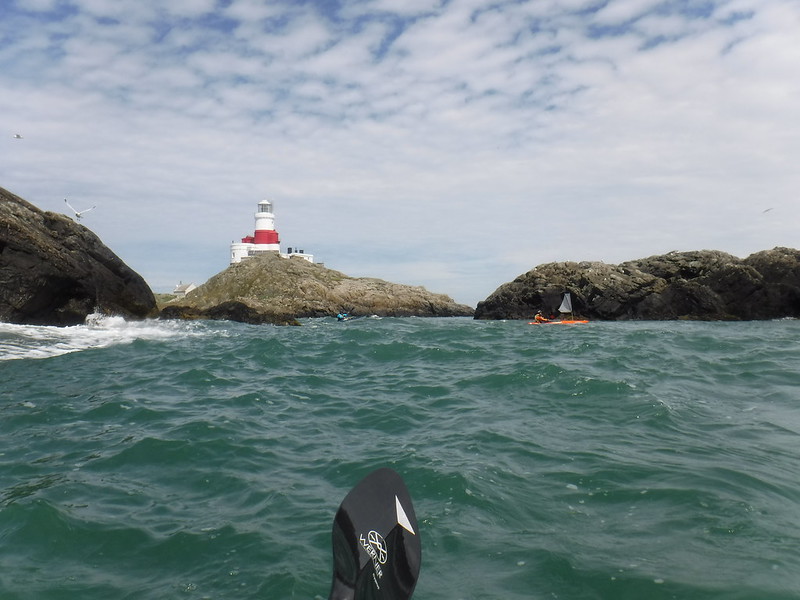
The Skerries
Departing The Skerries
Surfing circuits at The Skerries
The return leg had 10-17 knots of southerly wind against the south flowing ebb tide. Time of leg – 3 hrs.
The rough journey back south
North Stack
Taking a rest at South Stack
Sailing home to Porth Dafarch
The team returned at Porth Dafarch with our paddling friend Jan
Initial thoughts on the Octane
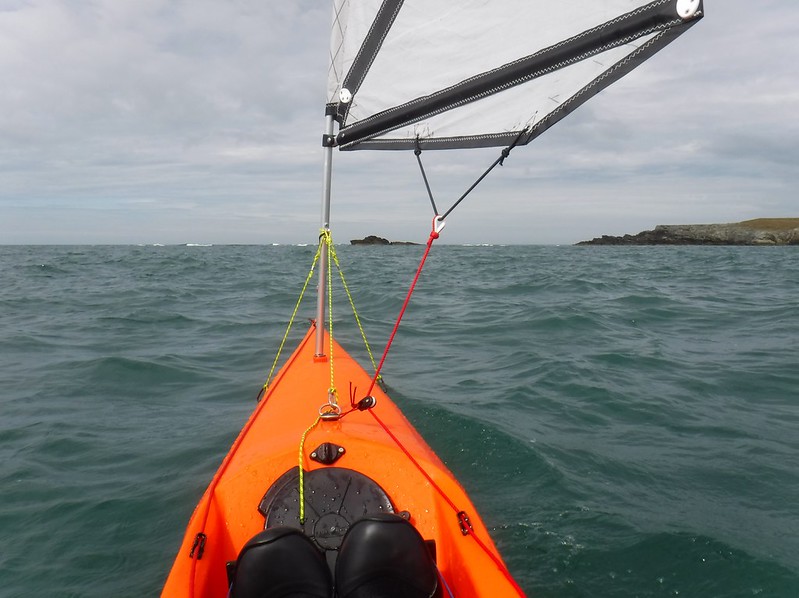
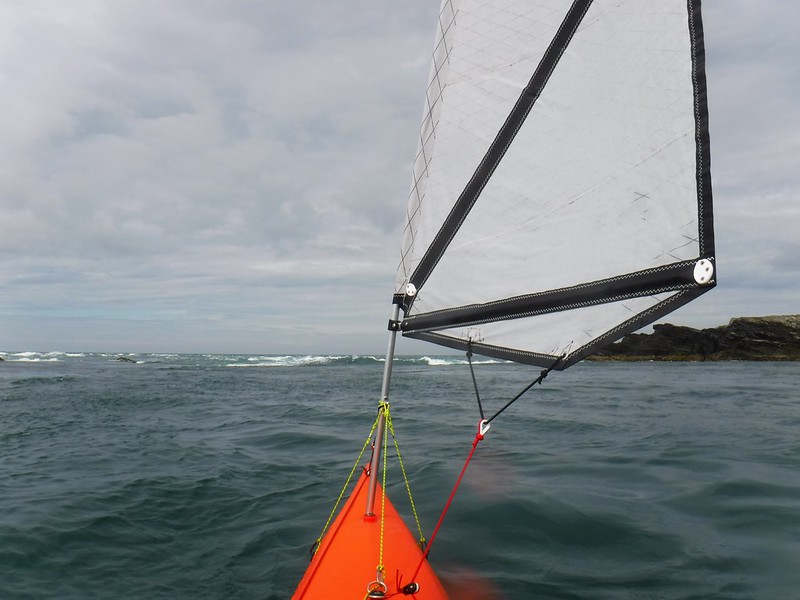
Previous to receiving the Octane I had never paddled a surfski. The closest speedy boat I had experienced to compare it to is the Rockpool Taran. The Octane, like the Taran, is great fun to paddle fast, especially in surf. At speed the surf ski is particularly stable, locking into its watery path. Its stability seemed further enhanced with the addition of the Flat Earth Sail, as this gave more propulsion. It is even better to sail than the equivalent P&H Scorpio or Delphin sailing kayaks as it is super quick and responsive to the rudder. With its open cockpit it felt a lot like a modern sailing dinghy, especially with the gurgling sound of the self-bailer.
Paddling downwind with swell was far, far better than the reverse into wind and waves. The former situation gave much greater speed than the accompanying sea kayaks, whereas into wind and swell the surfski was only marginally quicker, despite lots more effort from my core muscles. I probably need to improve my technique in these conditions.
The Octane is a very positive boat. It rewards good posture and technique with better performance. This feedback is proving really useful as I try to get better at paddling a surf ski.
Next time I want to try some more downwind runs!
Geth
When I was looking to replace my trusty P&H Scorpio Lv with a Cetus I spend hours looking on the internet to find footage where I could see the boat in action. I know what you’re thinking, why not testing it rather that looking at videos? Well, I already did and I was sure that the Cetus was going to be my next boat. The kayak customizer page on the P&H site is awesome, I think I made my boat virtually one hundred times. But it’s even better to see the boat on the water, with a paddler in it. To see it’s colours, to see the different options, to see its behaviour,… Even when waiting on the delivery I searched “Cetus videos”. The only downside was that there are not many to be found where you can see the boat from different angles. So I remained a bit unsatisfied for the time being…
With the delivery I felt like a kid with his new toy (and I still am by that matter). It was my first composite boat, new, shiny, glossy! I already paddled several hundred kilometres with it, in a wide variety of conditions. Just like its polyethylene brother, the Scorpio, it never lets me down. On the water it has to perform, it goes fast while being stable, very stable. Even when paddling in rough seas it still feels like I am paddling from my couch. When putting it on edge it steers and turns very well. Anyway, don’t take my word for it. I am perhaps a tiny bit subjective. When looking to buy a quality sea kayak, make sure to test this piece of craftsmanship and see for yourself!
Enjoy our short video, a big thanks to Sylvie, who filmed from different angles to get the best result.
Paddle safe and take care of each other on the water!
Dimitri Vandepoele
NORTHSEAKAYAK
The British public have spoken, and they’ve elected to leave the European Union.
The full effects of Brexit are yet to be seen, and this resultant uncertainty in the UK’s political climate has led to a significant fall in the value of the Pound in relation to both the Dollar and the Euro.
For non-UK manufacturers, this means their products have become much more expensive when imported to the UK market, whereas our products (proudly made in the UK since 1971) have remained at the same price to our UK customers, and are now even better value to those in the US, EU and further afield.
However, this won’t last; although we manufacture all of our products in the UK, many of the raw materials and much of the packaging are oil-based, and as oil is traded in Dollars, the cost of these is sure to rise in the next few months once our pre-agreed contract pricing comes to an end.
If you’re asking yourself, ‘Is now the right time to buy a kayak?’, the answer is a resounding yes, as no one can predict by how much prices of the raw materials that go in to a kayak will rise, but as the margins we make on them is minimal, these price rises are sure to affect the consumer.
There has never been a better time to buy a British Canoe or Kayak, check out the P&H Sea Kayaks range now.
The Cetus MV was, yet again, my boat of choice to meet all my coaching and personal paddling needs for this year.; whether it is introducing aspiring sea kayakers on sheltered waters, running 5 Star courses in the Pentland Firth, away on expeditions around Scotland’s amazing coastline or playing out at the Grey Dogs, for me, it just does it all. It also gives me a real stable platform for on-the-water-photography when doing my books, articles and sponsors’ photos; with an expensive SLR digital camera in my hand, and the opportunity to capture that ‘perfect front cover picture’, that’s pretty important!
So, when my latest Cetus MV arrived the other week, as always I was excited to get it out on the water, but this boat was just that little ‘more’ special; PeakUK have updated the colours on their sea range of kit this year, and knowing this, it seemed rude not to have a boat to match! With some helpful collaboration between PeakUK and P&H, the colours were matched and that allowed P&H to do their ‘magic’ in customising the perfect boat for me! As you would expect, they really went to town on it and not only was the boat colour matched, but all the trimmings (decklines and bungees) as well – brilliant!!

With the perfect boat from P&H and the awesome kit from PeakUK, a suitably spectacular venue was required for its first outing, along with some great light to get the photos to show it off; the North West Highlands of Scotland were the destination and the amazing Island of Handa was the prime spot to visit. If you’ve not been to Handa yet – go… It offers towering cliffs, caves and arches aplenty, along with the enormous ‘Great Stack’ of Handa. All this is guarded by thousands of sea birds, with the raw force of the Atlantic Ocean on one side and the relative shelter and beaches of the Sound of Handa on the other. It’s easily accessible to paddle around, yet once there you will feel on the edge of the world in a very exposed way!

So, with some careful weather watching, some great evening light was found to paddle around Handa Island and ‘wet the hull’ of my rather unique boat – may she see many more such great trips in the months to come… thanks to all the P&H team for making her so brilliant!!

Ik heb gedroomd. Ik heb hard getraind. Ik heb mij goed voorbereid. Ik heb op 30 en 31 juli 2015 de Noordzee overgestoken per zeekajak, enkel op spierkracht, alleen en zonder begeleiding of ondersteuning van een ander schip. Ik heb ’s nachts en overdag gevaren, ik ben mezelf tegengekomen, ik heb gejubeld en gevloekt! Dit is het verslag van mijn North Sea Crossing.
Ik ben fervent zeekajakker en droom er al jaren van om de oversteek te wagen tussen Engeland en het vasteland. Wat ik absoluut niet wou is het Kanaal oversteken gezien dit niet aanzien wordt als een “open zee” oversteek. Ik opteerde om de verbinding te maken tussen twee zeehavens en hierbij het zuidelijkste gedeelte van de Noordzee over te steken. Aan deze oversteek gingen twee jaar planning en voorbereiding vooraf. Diverse vooropgestelde data gingen helaas voorbij zonder dat de meteorologische omstandigheden voldoende gunstig waren voor dit huzarenstuk. In de week vlak voor de oversteek bleek het weerbeeld voldoende gunstig en stabiel om de laatste voorbereidingen te treffen. Toch diende ik één dag uit te stellen door onweer.
Tochtverslag:
Op 30 juli 2015 was het eindelijk zover. Hoewel ik zelfzeker was heb ik de nacht ervoor bijna geen oog dicht gedaan. In mijn geval blijkt dit echter volledig normaal. De oversteek is geen klein tochtje meer te noemen. Vlak voor vertrek lichtte ik Oostende Radio/Kustwacht en de Dover Coast Guard in omtrent mijn bedoelingen. Zij beschikken over een vaarplan en de verwachte aankomsttijden bij de diverse boeien en bakens. Mijn vrouw Sylvie was mijn ondersteuningsteam te lande en zou gedurende de tocht contact onderhouden met beide diensten. Om 21:30 uur stipt vertrok ik in de haven Nieuwpoort, na afscheid genomen te hebben van mijn vrouw en kinderen en mijn ouders. Het was mijn wens om zo weinig mogelijk mensen op voorhand in te lichten om het vertrek minder zwaar te maken. Ik voer de haven buiten, langsheen het staketsel van Nieuwpoort waar ik door mijn familie een laatste maal uitgezwaaid werd. Ik zette mijn koers uit richting de boei Trapegeer en tot daar kon ik nog profiteren van een sterke getijstroming in mijn voordeel. De zon was dan al een tijdje weg, de duisternis was mijn stille metgezel. Er stond een volle maan, dit kwam de zichtbaarheid ten goede maar dat wil ook zeggen dat de stroming sterker is (springtij). Vanaf de boei Trapegeer keerde het getij en heb ik tegen deze zéér sterke stroming moeten opboksen gedurende een zestal uur, non-stop. Ik kwam tijdens de nacht slechts één schip tegen, hoewel mijn verlichting steeds aan en in orde was stak ik hier veiligheidshalve even mijn stroboscoop aan gezien het visserschip even op ramkoers lag. Het schip wijzigde zijn koers hierna.
Op 31 juli 2015 om 04:48 uur kwam ik aan bij de boei DY1, al een gans eind in de Franse wateren. Ik kon hier een allerlaatste maal mijn positie en toestand doorgeven aan radio operator Marc van Oostende Radio. Het was de laatste vriendelijke stem die ik de komende uren zou horen. Mijn afgelegde afstand was op dat moment 35 km.
Na de boei DY1 begon de stroming stil te vallen en uiteindelijk te keren in mijn voordeel. Dit was precies volgens mijn berekeningen. Ik lag ook al voor op mijn planning wat positief was. Ik heb de zonsopgang nog meer weten te appreciëren bij deze tocht, ze was prachtig op volle zee. Ik passeerde de boeien Ruytingen SE en Ruytingen NW in de laatste aanloop naar de internationale scheepvaartroute. Ik nam slechts korte pauzes om het uur om snel iets te eten en te drinken. Vanaf de boei Ruytingen NW begon het middelste gedeelte van mijn oversteek; het kruisen van een enorme snelweg midden op zee. De vaarroute is te vergelijken met een autosnelweg, volgens cijfers van de Dover Coastguard passeren hier per 24 uur gemiddeld 500 grote zeeschepen. Deze geul is ongeveer 20 km breed op het punt waar ik over moest. Snelheid is van het grootste belang alsook aandacht voor de scheepvaart. Grote schepen zien mij NIET! Ik dien zelf alles in te schatten en indien nodig mijn koers te wijzigen. Het eerste gedeelte naar de boei Sandettie WSW ging als vanzelf, ik kwam géén enkel schip tegen. Toen ik over de Sandettie Bank voer was het alsof er branding in volle zee stond! Ik kon er zelfs surfen!
Hierna diende ik de tweede en laatste vaargeul te kruisen tot aan de boei South Falls. Ik had de stromingen zéér goed ingeschat. Deze zijn er bijna dubbel zo sterk als voor onze eigen Belgische kust. Hier diende ik even haast te zetten voor vier aankomende zeeschepen vanuit de NW-richting. Gevaar was er echter nooit, ik kon er ver genoeg vandaan blijven.
Het moment dat mij het meest is bijgebleven is toen ik voor het eerst weer opnieuw land zag! De kliffen van Sint Margarets at Cliffe nabij Dover zijn al van ver te zien! Dit was toen ik net de boei South Falls passeerde. Fantastisch!!!
Vanaf de boei South Falls ben ik voor het eerst van mijn geplande route afgeweken. Ook dit was doorgeven aan mijn vrouw. Ik had vooraf een secundaire route opgesteld indien ik voorliep op mijn initiële planning, dan zou de stroming nog anders zijn. Ik zette koers naar het E Goodwin lichtschip in plaats van de E Goodwin boei. Ik bereikte het onbemande lichtschip op 31 juli 2015 om 11:45 uur (Belgische tijd) en kon er voor het eerst sinds boei DY1 uren geleden radiocontact maken met de Dover Coastguard. De vriendelijke radio operator kon er ook mijn toestand en positie doorgeven aan mijn vrouw Sylvie. Het Goodwin lichtschip ligt op een 14 km offshore en is de aanduiding voor de scheepvaart voor de Goodwin Sands. De Goodwin Sands vormen een gevaar voor de scheepvaart gezien hun geringe diepte en onvoorspelbare zeegang, een deel van de banken komt zelfs boven bij eb. Perfect dus voor een getrainde zeekajakker om over te varen, wat ik dus deed. De banken lagen volledig onder maar de zeegang was fenomenaal. Er was vrijwel geen wind maar door de sterke stroming stonden er brekende golven van ca. 1 m hoogte! Een uitdaging, maar enorm lonend! Gek om na zo’n afstand nog steeds energie te vinden om te surfen op meer dan 10 km van de Engelse kust!! Ik kwam er nog een tiental zeehonden, zowel gewone als grijze, tegen die bij laag water komen rusten op de banken.
Zoals men zegt, de laatste loodjes wegen het zwaarst….. Er zit waarheid in, de stroming was vanaf daar opnieuw in mijn voordeel, maar zo sterk dat ik onder een grote hoek diende bij te sturen om de haven van Ramsgate nog te bereiken. Ik voer de haven binnen in alle rust. Ik lag zo ver voor op mijn planning dat zelf mijn ondersteuningsteam nog niet ter plaatse was. Sylvie had oponthoud in de haven van Calais voor enkele uren, door problemen met vluchtelingen. Ik kwam aan bij de enige kleine slipway die de haven van Ramsgate rijk is op 31 juli 2015 om 15:06 uur (Belgische tijd).
Ik ben aan de slipway enkele uren gebleven tot de komst van Sylvie. Gelukkig was ik zoals altijd goed voorbereid, ik had extra kledij mee en ook voldoende drank en voedsel. Ik heb er met veel smaak een portie spaghetti verorberd die ik met mijn brandertje opwarmde. Daarna kon ik even rusten om uiteindelijk mijn vrouw en kinderen weer in de armen te sluiten en terug huiswaarts te keren met de ferry.
Slot:
Pas bij dit schrijven begint het mij door te dringen wat ik verwezenlijkt heb. Ik voel elk spiertje nu in mijn lichaam. Ik ben, zelfs na 12 uur slapen, nog moe. Maar ik ben vooral blij! Ik ben trots op deze sportprestatie. Hier telde niet alleen de afgelegd afstand, maar ook het zeemanschap en de kennis en kunde om goed te navigeren en de juiste beslissingen te nemen op het goede moment. Niet alleen het fysiek in staat zijn om meer dan 100 km te peddelen in één trek, maar ook de mentale toestand om moederziel alleen en zonder enige vorm van ondersteuning of begeleiding de overtocht te maken geven mij enorme voldoening! Alles bij zo’n tocht valt of staat met je eigen voorbereiding en training! Als extraatje voor mezelf komt er nog bij dat ik de oversteek in een kortere tijd heb kunnen doen dan dat ik vooraf had gepland!
Ik wens hierbij mijn vrouwtje Sylvie te bedanken voor haar grenzeloze ondersteuning bij al mijn zotte ondernemingen! Zonder haar was dit niet mogelijk geweest! Hetzelfde geldt voor de weinige mensen die vooraf op de hoogte waren van mijn onderneming, bedankt voor jullie komst bij vertrek, alsook voor de talrijke lieve telefoontjes en berichten! Bedankt aan radio operator Marc van Oostende Radio die mijn bewaarengel was tot aan de DY1 boei! Hetzelfde geldt voor de al even vriendelijke crew van de Dover Coast Guard, zij waakten over mij van het Goodwin lichtschip tot de haven Ramsgate!
Ik hoop tevens met deze tocht het Belgisch zeekajakken in de kijker te plaatsen. Het is niet omdat we een relatief korte kustlijn hebben dat we niet in staat zijn grootse dingen te doen! We blijven naar goede gewoonte elkaar en andere zeekajakkers ondersteunen met onze NORTHSEAKAYAK-groep!
Technische fiche:
De GPS die de tocht registreerde werd niet afgelegd gedurende de ganse onderneming. De gegevens zijn hiervan afkomstig en aldus correct.
- Totale afstand: 106,7 km
- Totale tijd: 17uur36min
- Gemiddelde snelheid: 6,1 km/h
- Maximaal geregistreerde snelheid: 13,5 km/h
- Gebruikte kajak: P&H Scorpio LV (Polyethylene)
- Gebruikte peddel: Vertical Elements Explorer Aircore Pro full carbon
- Complete veiligheidsuitrusting met oa PLB (Personal Locator Beacon), 2 VHF radio’s, vuurpijlen, extra verlichting,….
De video kan hier bekeken worden:
I have dreamed. I have prepared. I have trained hard. I have crossed the Southern part of the North Sea by sea kayak on the 30th and 31st of July 2015; man powered and alone, no support or pilot vessel, no support whatsoever. I have paddled during day and night. I’ve been exhausted, excited and happy, all at the same time.

This is my story.
I have had this dream to cross the North Sea for years, and finally the weather conditions were perfect; so I planned, made calculations to counter the tide and prepared myself mentally.
The crossing!
On Thursday 30th of July I said my goodbyes to my family. Right before starting I sent a message to both the Belgian and British Coast Guard to inform them of my plans and estimated route. At 21:30 hours sharp I sat in my sea kayak and paddled to open sea. I waved to my family one last time when passing the pier. I was lucky, after sunset I still had some light due to a full moon; the downside was the current, a full moon means spring tide! Up until I reached the Trapegeer buoy I had the tidal stream in my favour, after that point (fully calculated in advance) I had to paddle 6 hours against a strong tide. At 04:48 hours I arrived at the DY1 buoy; it was slack at that point, but the tidal current should change direction soon. I had radio contact one last time with Marc, the friendly radio operator from the Belgian Coast Guard (Ostend Radio) to give him my current position and state. He was in close contact with Sylvie (my wife and support team) to keep her informed. After that point I was on my own until I was in range of the British Coast Guard. I paddled on, with the current in my favour this time, to the Ruytingen SW and Ruytingen NW buoys. In the meantime the sun was rising which made the crossing of the international fairway a bit easier. According to the Coast Guard almost 500 sea ships are passing through that lane every single day; I had to keep watch in order to stay as far away from those big ships as possible. I doubted that they would even spot me!

I paddled as hard as I could, having a strong tidal current on the my side. I managed to get over the shipping lane, along the buoys Sandettie WSW to the South Falls without troubles. I only spotted 4 big sea ships but I passed them at a distance, and after that I changed my course and diverged from my planned route to a secondary planned route in order to counter the very strong tidal current that was pushing very hard from my right. Eventually I arrived at the East Goodwin light ship, where I established radio contact with the Dover Coast Guard; they we’re already fully aware of my intentions and also in touch with my wife, informing her of my position and state. The crew on the radio were very friendly towards both me and my wife.


The East Goodwin ship is an unmanned lightship that brings the very treacherous Goodwin sand banks to the attention of ships; dangerous for almost every other vessel but ideal conditions for a seasoned kayaker. With almost no wind at all there were waves between 0.5 and 1 metres in height! In that area I saw numerous seals, wonderful!! The sand banks were the last piece of the crossing; after that I headed towards Ramsgate harbour. The tidal current was now pushing on my left side so I had to compensate heavily in order to reach the harbour. I reached the slipway of Ramsgate harbour at 15:06 hours (Belgian time). I was so far ahead on my estimated arrival time that my welcome party had not arrived yet; luckily I was prepared for that, I had dry clothes and plenty of food and drinks with me. After a few hours my lovely wife and kids arrived, it was a happy reunion!! We took the ferry back to the mainland together.

I wish to thank my wife Sylvie for her constant support in chasing my biggest dream, the North Sea crossing, as well as in all my other so called foolish plans regarding sea kayaking! I want to say thanks to Marc, the radio operator from the Belgian Coast Guard – Ostend Radio for keeping an eye out for me up to the DY1 buoy, and to the friendly crew from the Dover Coast Guard! To those people; your help is very much appreciated both by myself and my wife!
We hope that this crossing will put Belgian sea kayaking on the map, and a big thanks to my other Northseakayak-members for their continuous support!
Technical data:
The full crossing was correctly registered by GPS.
• Total distance: 106,7 km
• Total time: 17 hours 36 minutes
• Average speed: 6.1 km/h
• Maximum registered speed: 13.5 km/h
• Craft: P&H Scorpio LV (Polyethylene)
• Paddle: Vertical Element Explorer Aircore Pro Full Carbon
• Full safety gear including two VHF radios, a Personal Locator Beacon, flares, etc.
You can watch the video below:
The idea of the trip was to try and paddle around Cape Farewell from Nanortalik and return, attempting some Alpine ascents of any suitable peaks we came across along the way.

Cape Farewell is at the southern tip of Greenland and exposed to the entire ocean swell, it is also a committing coast with high cliffs and no easy landings; we knew this would be the crux of the trip, and we also knew Cape Farewell is the windiest region in the world, so getting a good weather window would be vitally important.

We shipped two barrels out to Neil Jepson at the Nanortalik Tourism Service a month before we left, these contained all the food packed into day bags and the climbing equipment; we left on the 12th of August, a little later than I usually go. The later departure was due to having to wait for the kayaks to be available, which were hired through Doug Copper of Glenmore Lodge from their fleet of P&H Capellas stored with Neil. Two days and 4 flights later, including 2 by helicopter, we arrived and were met by Neil; he was very helpful and we picked up the boats and barrels that day, meaning we were able to leave the next day.

The Capellas had skegs and I was worried we wouldn’t get all the kit in; we had 23 days’ food, all the camping kit, two 50m ropes and climbing gear. It was a tight fit with the cockpit rammed and quite a bit of gear strapped to deck bags, but it all was in and we left around lunchtime on the 14th. The boats were very heavy and, because of the gear on the back, they weather cocked badly even with the skeg down; not ideal as we headed off into a side wind!

The first headland we encountered was exposed to swell with no easy landings and we realised this could be an awkward on our return in bigger conditions. At our first campsite we stashed 3 food bags for our return as there looked like some possible climbing in the area on our return, this also got rid of some kit from back decks. The next few days we were in the shelter of an island system, then we had another exposed headland to a campsite at Ink Gait, the site of an old Viking settlement over 1000 years ago. We camped in the ruins of an old church and also had our first encounter with a Minke Whale who came very close!

The following day we had a mountaineering day with a rope and small rack and climbed Ikiagtqaqot to 900m, a lovely ridge scramble with small pitches of scrambling and stunning views in
good weather. We managed to get a mobile signal as we had a view of the settlement of Frederiksdal and the forecast seemed ok. We did work out on the trip that the weather changes very fast and the difference between a report from Nanortalik and out on the coast could be vast.
We did decide to go for the crux of the trip and attempt Cape Christian and Cape Farewell, this would be a big day in distance and we had a lot of fog to deal with at the start. Cape Christian eventually appeared out of the fog, but as we came around the headland the wind suddenly increased and we were faced with the sight of a large area of breaking waves over some low islands in front. The wind was now blowing hard from behind and we struggled to get the heavy boats around into the swell and wind, so we decided we had to land on a very rocky shore. Although it was a difficult landing on a boulder beach, we were glad to be safe as the wind steadily increased; we were storm bound here all day, and although the wind eased by the next day, the swell was still big.

We crossed the bay and as we came around the Cape, the fog came in and the wind increased, but luckily after struggling around the wind eased. There were no easy landings, so we had to stay in our boats ’til we found a little shelter; eventually we landed at the west tip of Eggers Island and the following day did a new climb of 8 pitches on the scabby side of Quvperitqaqa, a grade HVS 5a called Dance with Seals.
The next few days we had good weather paddling down Ikaq Fjord, but we again got caught out crossing Anordliutssup Ima when the wind and waves picked up to a force 5 and we were committed to cross. We stopped briefly in the village of Augpilagtoq, where the villagers told us they had shot a polar bear a few weeks ago; this was our only stop in 3 weeks. We were storm bound for a day close to here, but the weather improved again and we headed south down Torssukatak Fjord, again we hit bad, windy weather at the end of the fjord and had to turn and run to find shelter. The weather was definitely changing and following a pattern of calm in the morning and windy in the afternoon, so we got early starts and got back into the shelter of Iglu Kasip Tunua Fjord, where we knew there was an old hut where we left some food; we had a day here stormbound, then headed down the fjord and camped.

We spent 3 days here, one day again sheltering from rain, but the second day, although it was foggy, we went to try and climb a big mountain face we had seen. As we climbed, we came out of the cloud and the face was bigger than we thought, 12 pitches later we reached the top; some good climbing and the usual loose rock on a big mountain face. The climb was graded at E1 5B and we called it Keeping the Faith. We now had a week left to explore another area we had seen closer to Nanortalik; we had to negotiate another headland we had passed when it was windy the day before, but when we woke up from camp it was flat and calm in the bay we were in.
We set off and as soon as we headed onto the open sea we got the swell and wind, the next hour we battled around the tide; the swell and wind created some of the biggest seas I have ever been in and any rescue was out of question. We made it into bay and landed, once again the wind got stronger as the afternoon wore on, so we found a sheltered spot for the tent; it was now bitterly cold with snow on the tops.

As we were now in sight of Nanortalik, I managed to get a phone signal and got a weather forecast. More bad weather was coming in 2 days, so we decided the following day to head back in rather than be stormbound again. The following day was calm and we headed back in around mid afternoon for showers and beers. We had finished a few days early, but we had succeeded in all our objectives and felt happy that we had survived some very challenging conditions.

Distance Paddled:
270km over a 21 day period (approx. 15 paddle days, 4 days stormbound and 3 climbing days)
Kayaks:
2x Plastic P&H Capella 166s with Skegs
Paddlers:
2x Werner Paddles and 1 Set of Spare Paddles
Paddling Kit:
Palm Aleutian Dry Suits
Palm Buoyancy Aids
Palm Nova Wellies
Palm Spray Decks
Tent:
Terra Nova Heavy Duty Hyperspace
Sleeping Bags:
Mountain Equipment Titan 850 Down Bags
Stove:
MSR Whisperlite Combo
Climbing Kit:
2x DMM Alpine Harnesses
2x 9.8 m DMM 50M Ropes
12x Quick Draws
5x Slings and Krabs
Double Set of Wires 1-10
9 Assorted Cams
Helmets
Rock Boots
Other Gear:
30m EPIRB
VHF RADIO
Mobiles (although only a few places had phone coverage)
Various Camera Kit
The Team Would Like to Thank the Following:
P&H Sea Kayaks
Gino Watkins Funding and Arctic Club
Welsh Sports Association
BMC
Palm
Mountain Equipment
Werner Paddles
DMM
Cotswold Camping
Wild West Beef Jerky
A to Z Expeditions
Bromsgrove School
We just had Canadian Thanksgiving last weekend and what better way to burn off the turkey then to head out for a paddle. Not just any paddle but a paddle on “The Shubie” tidal bore.
There as no bore on this day but the tidal range was around 49 feet and it would be the first time I would use the hammer.
“The Shubie” tidal bore is a world class sea kayak play sport. It bore runs on a river called the Shubenacadie River located at the top of the Bay of Fundy. This video was shot on a tidal range of 49.3 feet. The river is a magical place and the hammer has to be in the top 3 boats I have used on the “The Shubie”.
Once the hammer was up to speed I was able to do cutbacks, bottom turns and surf waves for 2 to 3 minutes at a time. My fears were eased after the first small set on the river. The hammer picked up the waves quickly.
I was once told the hammer was to slow for “The Shubie” but after paddling it I would have to say it was one of my best days on the river. In this video there was no Bore wave to speak of but depending on the conditions there is a great front leading wave that forms a fun play wave and once it does up the river it leave us with plenty more things to play on. come to Nova Scotia.
You will be glad you did. There is a full writeup about “The Shubie” in ThePaddler online magazine
I hope you like the video